Skip to content
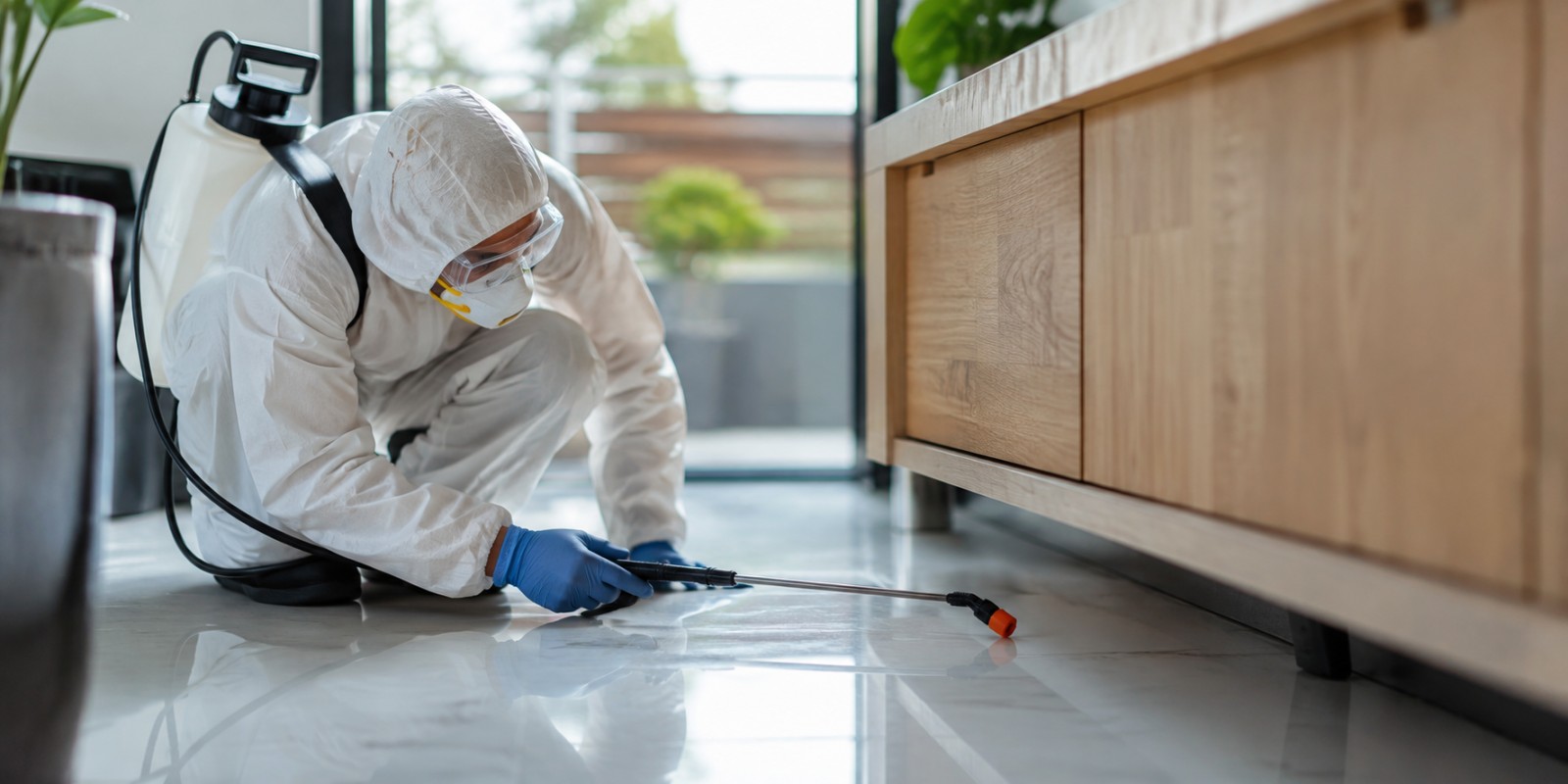
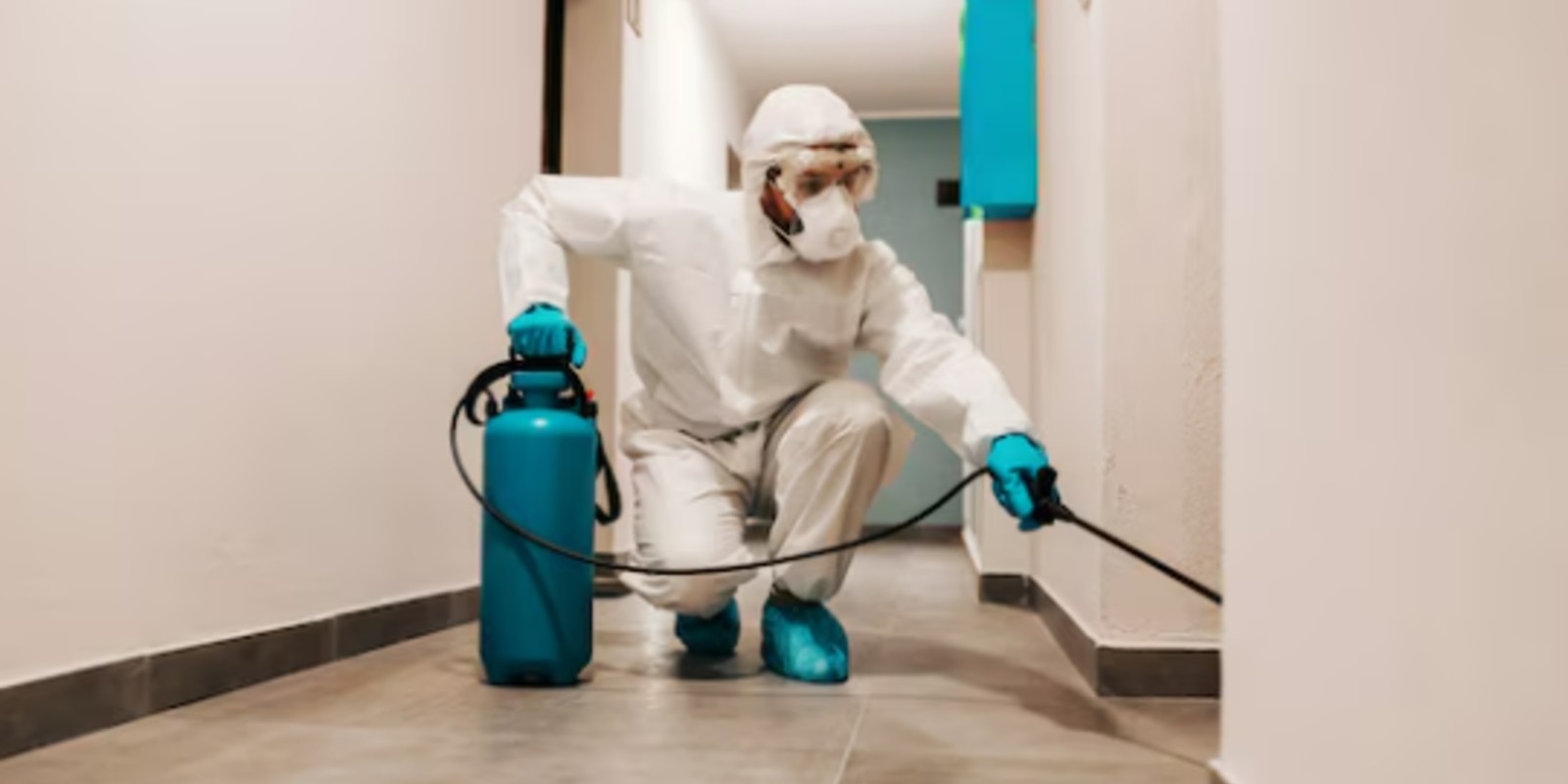
General pest control is the systematic management of common pests that can enter, live or reproduce within homes, businesses, and other occupied properties. It typically combines inspection, identification, targeted treatment, sanitation recommendations, exclusion, and monitoring to control existing pest activity while reducing conditions that encourage future infestations.
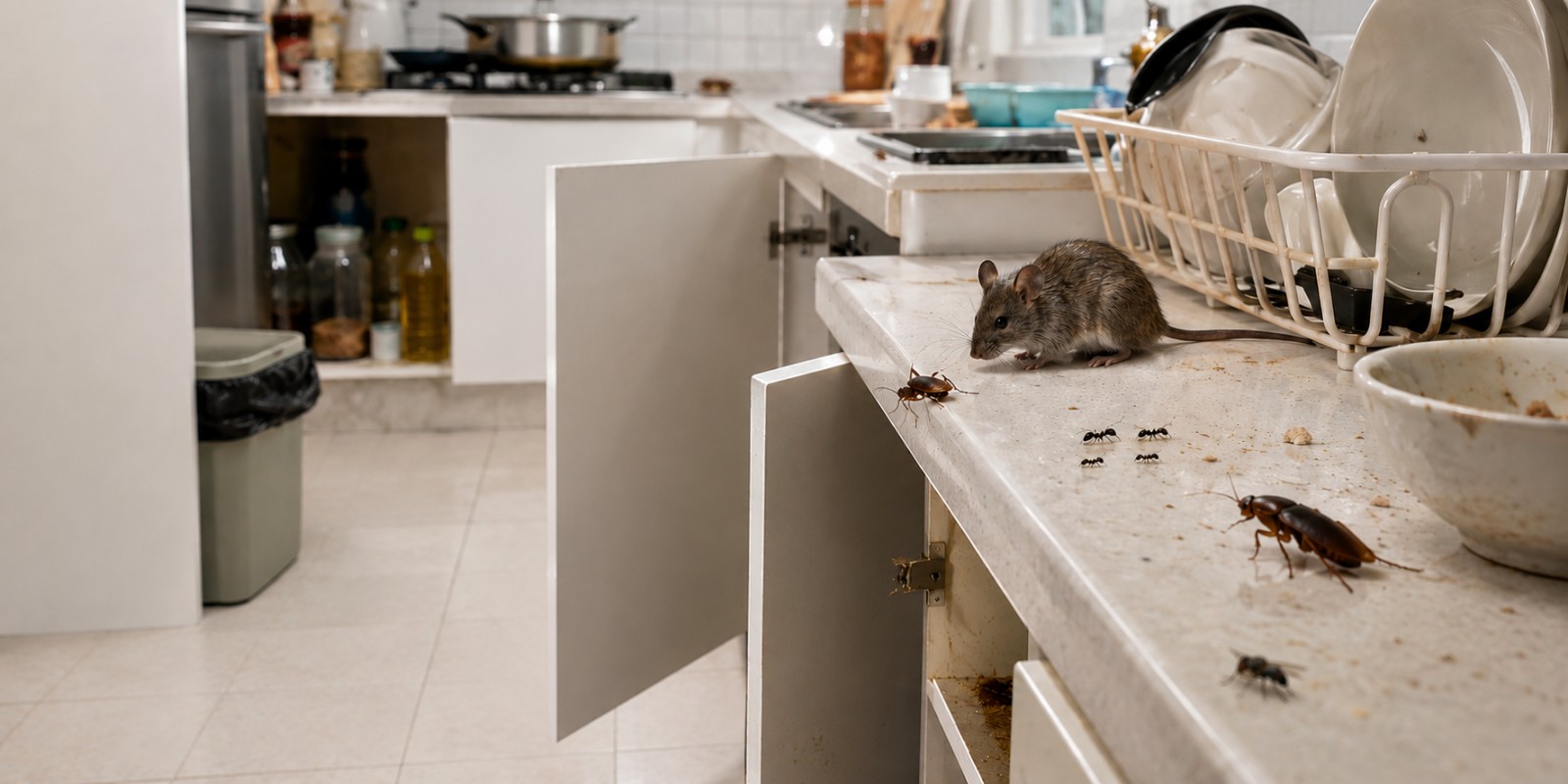
In Malaysia, warm temperatures, humidity, rainfall, dense urban environments, and readily available food and water can create suitable conditions for many pests. Cockroaches, ants, rats, flies, and other common pests may enter buildings through structural gaps, drainage systems, deliveries, and surrounding environments.
Effective pest management is therefore more than responding whenever an insect or rodent becomes visible. A pest problem may originate from concealed harbourage, structural access, poor waste management, moisture, or conditions outside the immediate treatment area.
General pest control services aim to identify these factors and determine an appropriate response. For homeowners, this can help maintain a more hygienic living environment. For businesses, preventive pest control can also support sanitation, property maintenance and operational standards.
Understanding how general pest control works helps property owners distinguish between simply removing visible pests and managing the conditions that allow infestations to persist.
What Is General Pest Control?
General pest control refers to the prevention, management, and treatment of common pest species found in residential, commercial and other occupied properties. The exact pests and treatments covered depend on the provider, property and type of infestation.
A general pest-control programme normally begins with identifying the pest.
This matters because different pests have different food sources, breeding behaviour, harbourage (environments providing suitable habitat for pests to reside), and movement patterns. A cockroach problem cannot be managed in exactly the same way as an ant or rat infestation.
Once the pest has been identified, inspection helps determine where activity is concentrated and what conditions are supporting it.
Treatment may then involve physical, chemical or environmental control methods.
General pest control can also include preventive measures even when no major infestation is currently visible. This may involve monitoring known risk areas, identifying structural vulnerabilities and recommending improvements to sanitation or waste management.
The purpose is therefore twofold: control existing pest activity and reduce the likelihood that the same conditions will support another infestation.
General Pest Control vs Pest Removal
General pest control differs from simple pest removal because removing individual pests does not necessarily address the infestation or its source. A visible pest is often evidence of a wider environmental or structural condition.
For example, killing several ants on a kitchen counter removes those individual insects but does not eliminate the colony or identify how they entered.
Capturing one rat does not confirm that there are no other rats within a ceiling, wall space or external harbourage.
Similarly, spraying a visible cockroach does not address concealed cockroaches, egg cases or possible access through drains and service areas.
Professional pest control therefore looks beyond the immediate sighting.
The broader process may examine:
- Where pests are entering.
- Where they are feeding.
- Where they may be breeding.
- Which conditions provide water or shelter.
- Whether activity extends to other areas.
- What measures can reduce recurrence.
This distinction is important because repeated removal without source control can create a cycle of temporary improvement followed by another infestation.
Pests Covered by General Pest Control
General pest control services commonly address frequently encountered insects and rodents, although exact service coverage varies between pest-control providers. Certain pests may require specialised treatments outside a standard general pest-management programme.
Understanding the pest involved helps determine whether general treatment is appropriate or whether a dedicated service is required.
Cockroaches

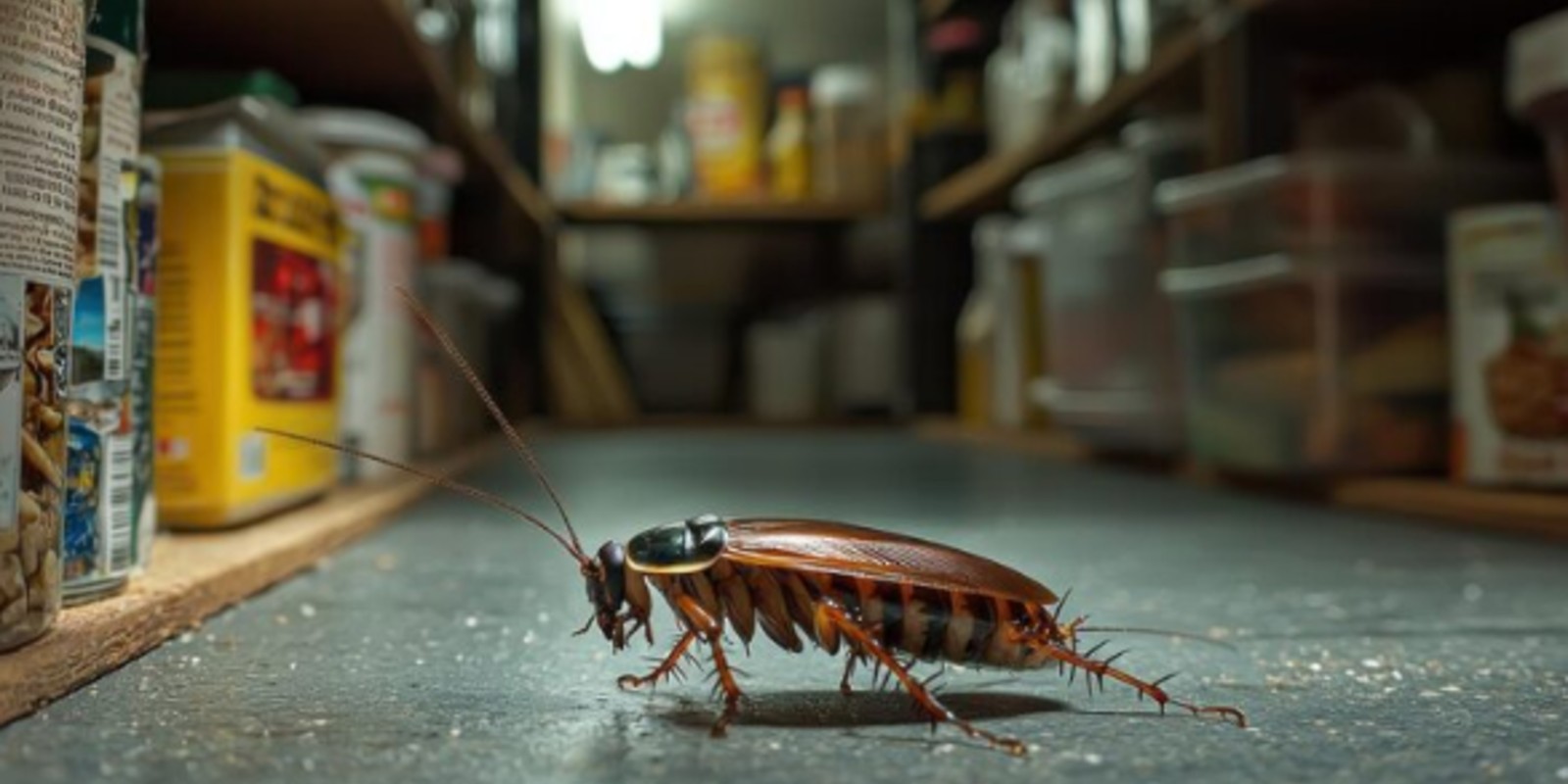
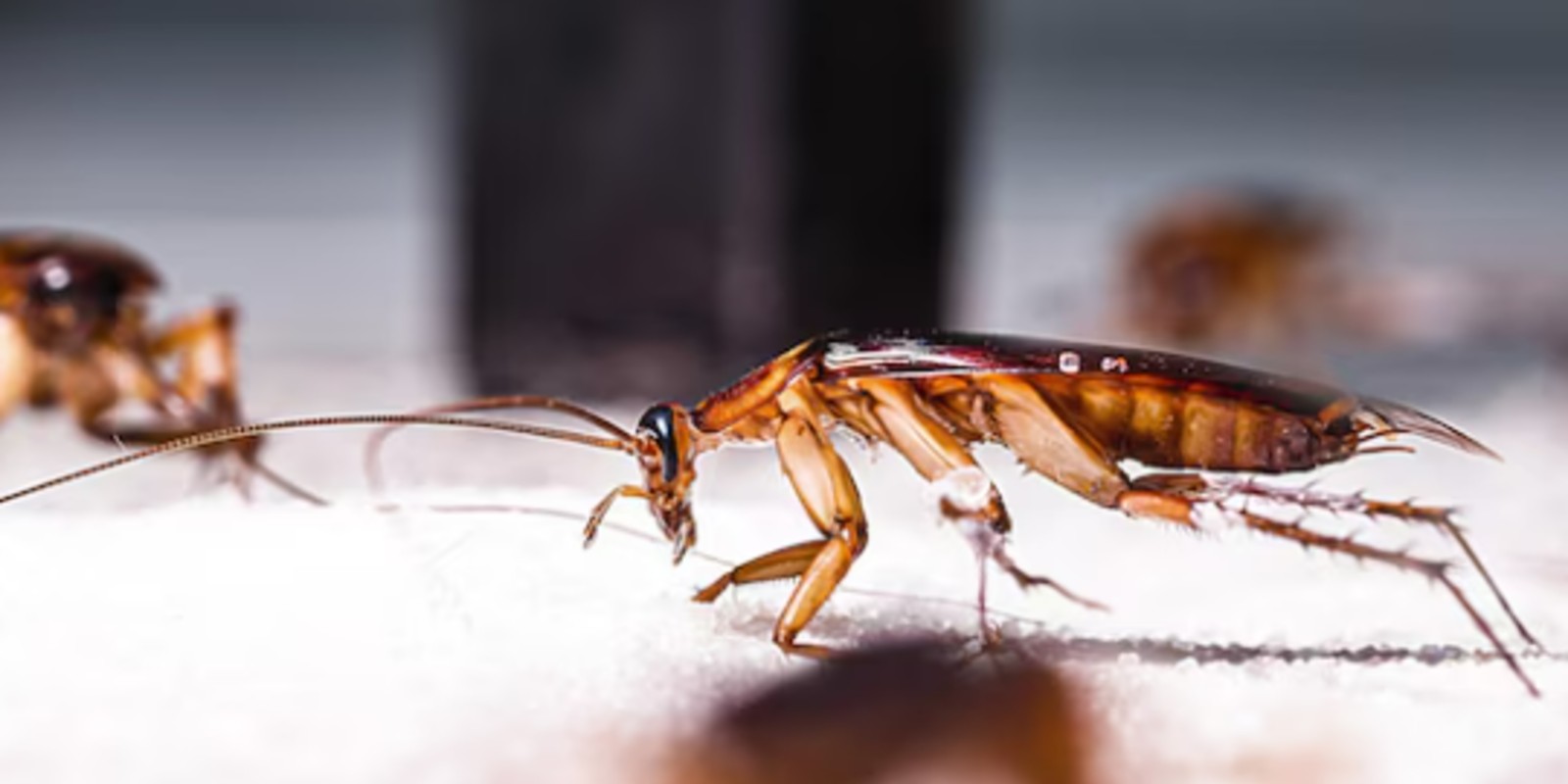
Cockroaches are common indoor pests that can establish themselves around food, moisture, warmth and protected harbourage.
Kitchens, bathrooms, drains, food-storage areas and spaces behind equipment can provide suitable conditions.
Cockroach control may involve inspection, baiting, targeted insecticide treatment, sanitation and monitoring.
Recurring activity often requires investigation of breeding areas and entry routes rather than repeated treatment of visible cockroaches alone.
Ants

Ants commonly enter buildings while searching for food and water.
Workers may form visible trails between a food source and a nesting area.
Removing the ants on the trail may provide temporary relief but may not affect the colony.
Effective ant management usually requires identification of activity patterns and potential nesting or entry areas.
Food residues and moisture should also be managed because they can continue attracting ants after treatment.
Rats and Rodents

Rats can enter properties while searching for food, water and shelter. Their activity may occur in ceilings, storerooms, kitchens, waste areas, drains and other concealed locations.
Rodent control can involve trapping, baiting, proofing recommendations and monitoring.
Because rats can repeatedly enter through unresolved structural openings, exclusion is an important part of long-term management.
Flies

Flies can become a problem when breeding materials and food sources remain available.
Waste areas, organic residues and poorly maintained drains can contribute to some fly problems.
Treatment should therefore address breeding sources where possible.
Killing adult flies without correcting the source may result in continued emergence.
Other Common Pests
Other pests may also fall within a general pest-control programme depending on the provider and property.
However, some infestations require specialist methods.
Termites, for example, affect structural materials and usually require dedicated termite inspection and treatment rather than being treated as an ordinary household insect problem.
Property owners should therefore confirm which pests are included within a general service rather than assuming one programme covers every pest species.
How General Pest Control Works
General pest control works through a sequence of identification, inspection, treatment and prevention. The process should be adapted according to the pest and property rather than applying the same treatment everywhere.
1. Pest Identification
The first step is determining which pest is present.
Identification affects the entire treatment strategy because pest species differ in behaviour and habitat.
For example, different cockroach species may favour different harbourage, while rat activity can vary according to movement and nesting patterns.
Evidence such as droppings, damage, tracks, nests or live specimens may assist identification.
2. Property Inspection
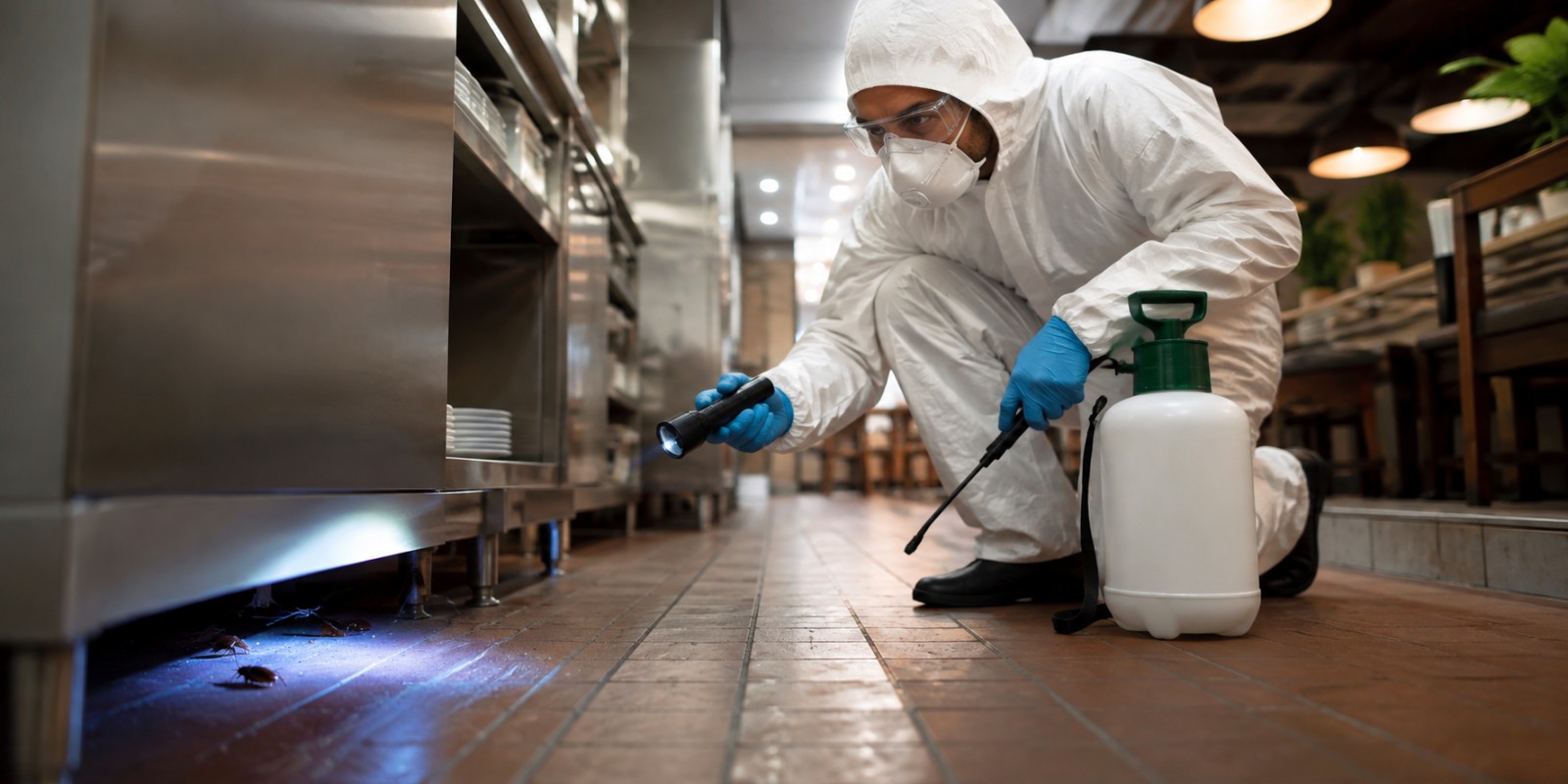
Inspection determines where pest activity is concentrated and which conditions are supporting it.
Technicians may inspect kitchens, storerooms, drains, waste areas, ceilings, external boundaries and other relevant locations.
The inspection may also identify structural access points.
3. Treatment Selection
Treatment is selected according to the pest, infestation level and environment.
Methods may include traps, baits, targeted insecticide applications or other appropriate measures.
A professional pest control strategy should consider safety, accessibility and the way the property is used.
4. Environmental Correction
Environmental conditions supporting the infestation should be addressed where practical.
This can include sanitation, food storage, waste management, moisture control and removal of harbourage.
5. Monitoring and Follow-Up
Monitoring determines whether pest activity is declining after treatment.
Follow-up may be necessary when activity continues, when pests have complex breeding cycles or when a property remains exposed to external pest pressure.
Together, these stages provide a more structured approach than reacting independently to each pest sighting.
Inspection as the Foundation of Pest Management
Inspection is essential because pest activity is often concentrated in locations occupants rarely see. Treating a property without understanding where pests are active can result in unnecessary treatment in some areas while important harbourage remains untouched.
The inspection should consider both pest evidence and environmental conditions.
Droppings, shed skins, gnaw marks, trails, nests and live sightings can indicate activity.
Structural openings, leaks, food residue and waste may explain why the infestation developed.
The exterior should also be considered.
Pests can originate from drains, vegetation, waste areas or neighbouring environments before entering a building.
Inspection therefore connects the visible infestation to its possible source.
For preventive pest control, inspections can also identify risk factors before a substantial infestation develops.
Why Regular Pest Management Matters
Regular pest management matters because pest conditions can change even after an infestation has been successfully controlled. New entry points, waste practices, weather conditions, deliveries or building changes can create fresh opportunities for pests.
A property that is pest-free today is not permanently protected.
Door seals can deteriorate.
Plumbing can begin leaking.
Renovation work can create gaps around utilities.
Stored materials can accumulate in areas that were previously easy to inspect.
Businesses may also experience changing pest pressure because stock, customers, waste and deliveries move through the premises continuously.
Regular monitoring makes these changes easier to detect.
The purpose is not necessarily to apply pesticides at every visit. Preventive pest management should use inspection evidence to determine whether treatment or corrective action is required.
Preventive Pest Control
Preventive pest control focuses on reducing the conditions that allow pests to enter and survive before a major infestation develops. It complements treatment rather than replacing it.
The basic principle is straightforward: pests are less likely to become established when access to food, water, shelter and entry routes is limited.
Practical preventive measures may include:
- Storing food appropriately.
- Managing rubbish consistently.
- Repairing water leaks.
- Reducing unnecessary clutter.
- Sealing suitable structural gaps.
- Monitoring higher-risk areas.
Different pests require different preventive priorities.
Rodent prevention may focus heavily on proofing and waste management, while cockroach prevention may require additional attention to moisture, drains and concealed food residues.
Preventive pest control is most effective when it becomes part of normal property maintenance rather than an action taken only after pests become visible.
Health and Hygiene Risks
Pests can create hygiene concerns by moving through waste, drains, food areas and other environments before contacting surfaces used by people. The significance of the risk depends on the pest, environment and type of exposure.
Cockroaches can contaminate surfaces and food environments through their movement and biological material.
Rats can contaminate areas through urine, droppings and contact with food or packaging.
Flies may move between contaminated material and food-handling environments.
Pest control therefore contributes to broader hygiene management.
However, pest-control professionals do not diagnose illness or determine whether a specific pest exposure has caused a medical condition.
The practical objective is to reduce pest activity and contamination opportunities.
This is particularly important in kitchens, restaurants, food storage facilities and other environments where pests can interact with products intended for consumption.
Property and Material Risks
Pests can damage buildings, stock, packaging, furnishings and other materials depending on the species involved. Some forms of damage may also create secondary maintenance problems.
Rats frequently gnaw materials as part of their normal behaviour.
They may damage packaging, stored goods and other building materials.
Certain insects can contaminate products or create visible damage that makes stock unsuitable for use or sale.
Termites represent a separate structural concern because they feed on cellulose-containing materials and can damage timber components.
This is one reason correct identification matters.
A general pest problem involving cockroaches requires a very different response from evidence suggesting termite activity.
Early inspection can help distinguish between these problems before unsuitable treatment is applied.
Pest Control Benefits for Residential Properties
General pest control can help residential properties manage recurring pests while identifying household conditions that contribute to infestations. Homes provide numerous potential pest environments, including kitchens, bathrooms, ceilings, gardens and storerooms.
A residential programme may focus on current pest activity as well as prevention.
Food residues and pet food can attract pests.
Leaks beneath sinks can provide moisture.
Openings around pipes or doors can create access.
Clutter can provide harbourage.
Addressing these conditions supports treatment.
Residents also play an important role by reporting where and when pests are seen.
Repeated sightings in the same location can provide useful information about movement routes or harbours.
Professional pest control can then focus on evidence rather than treating every part of the home equally.
Pest Control Benefits for Commercial Properties
General pest control can help commercial properties manage pest risks across operational areas where food, waste, stock, customers and deliveries create changing conditions.
Different businesses face different pest pressures.
Restaurants may require particular attention to kitchens, drains and waste.
Warehouses may focus on stock, loading bays and storage areas.
Offices can still experience pests around pantries, rubbish areas and utility spaces.
A commercial pest-management programme can provide structured inspection and monitoring across these areas.
Documentation may also help facilities teams identify recurring problems.
For example, repeated rodent activity around one loading entrance may indicate a structural problem requiring maintenance rather than simply more traps.
Effective commercial pest management therefore depends on cooperation between pest technicians, cleaners, employees, operations teams and building maintenance.
General Pest Control in Food-Handling Environments
Food-handling environments require particular attention because pests can interact directly with ingredients, preparation areas, equipment and waste. Pest management should therefore work alongside sanitation and food-safety procedures.
Inspection should consider more than visible preparation surfaces.
Food residues can accumulate beneath equipment, around drains and in storage areas.
Waste handling can also create pest pressure.
Deliveries introduce another factor because incoming goods and packaging may provide harbourage or transport for some pests.
Monitoring can help identify activity before pests become frequently visible.
When evidence appears, the response should address both the pest and the environmental source.
Simply increasing pesticide use while leaving food residues or waste accessible is unlikely to provide a complete long-term solution.
The Role of Sanitation
Sanitation reduces food and organic material that support many common pests. It is a fundamental part of pest management but should not be confused with pest treatment itself.
A clean property can still experience pests.
Cockroaches may arrive through drains or neighbouring units.
Rats may enter through structural gaps.
Ants can travel considerable distances while foraging.
Sanitation nevertheless makes the environment less supportive.
Effective pest-related cleaning should include less visible locations.
Grease beneath equipment, crumbs inside cabinets and residue around waste areas can remain available even when the main surfaces appear clean.
The objective is to remove resources while making pest evidence easier to identify.
The Role of Structural Exclusion
Structural exclusion reduces the openings pests use to enter or move through a building. It is particularly important for preventive pest control because treatment cannot permanently compensate for unrestricted access.
Potential entry routes depend on the pest.
Rats may use gaps around doors and utility penetrations.
Cockroaches may exploit cracks, drains and service openings.
Ants may enter through very small structural gaps while following food sources.
An exclusion assessment can consider:
- Door gaps and damaged seals.
- Openings around pipes.
- Vents and screens.
- Cracks and building penetrations.
- Drainage-related access.
- Roof or ceiling openings where relevant.
Proofing should be appropriate to the pest and structure.
Randomly sealing openings without understanding pest movement may not solve the problem and can occasionally redirect activity elsewhere.
Monitoring and Early Detection
Monitoring helps identify pest activity before it becomes obvious to occupants. It also provides evidence about whether treatment has worked.
The monitoring method depends on the pest.
Cockroach monitoring may use suitable sticky traps.
Rodent programmes may involve traps, bait stations or other monitoring points.
Visual inspection remains important for ants, flies and other pests.
Records can help reveal patterns over time.
For example:
| Monitoring Finding | Possible Interpretation |
|---|---|
| Repeated cockroach activity in one area | Nearby harbourage may remain |
| Rat evidence near a doorway | Possible structural entry route |
| Ant trails around food storage | Food source or colony route requires investigation |
| Persistent flies near a drain | Breeding material may require attention |
| No new evidence after treatment | Activity may be declining |
Monitoring does not replace treatment when an infestation exists.
Its role is to provide information that makes treatment and prevention more targeted.
How Often Should General Pest Control Be Done?
There is no single general pest-control frequency that is appropriate for every property. Treatment and inspection schedules should reflect pest pressure, property type, operating conditions and previous infestation history.
A home with occasional ant activity may require a different approach from a restaurant with continuous food preparation and waste movement.
Similarly, a warehouse receiving frequent deliveries may require more structured monitoring than a small office.
Factors influencing frequency include:
- History of pest infestations.
- Type of property.
- Food handling or storage.
- Waste volume.
- Surrounding pest pressure.
- Building conditions.
Regular service should not automatically mean routine chemical treatment regardless of evidence.
Inspection and monitoring should help determine what intervention is actually necessary.
A property with repeated pest problems may initially require more frequent follow-up, while stable conditions may allow the management programme to focus more heavily on prevention and monitoring.
One-Time Treatment vs Ongoing Pest Management
One-time treatment addresses a specific pest problem at a particular point in time, while ongoing pest management provides repeated inspection and monitoring for properties with continuing pest risk.
Neither option is automatically correct for every situation.
An isolated infestation with an identifiable cause may respond to targeted treatment followed by corrective action.
A commercial property with frequent deliveries, food handling or previous recurring infestations may benefit more from ongoing monitoring.
The decision should therefore reflect risk rather than convenience alone.
One-time treatment becomes less suitable when the same pest repeatedly returns because recurrence suggests that the source or surrounding conditions remain unresolved.
In those situations, a preventive programme can help identify changes before another established infestation develops.
Integrated Pest Management and General Pest Control
Integrated Pest Management, or IPM, is an approach that combines identification, prevention, monitoring and targeted treatment. Its principles can strengthen general pest-control programmes by reducing reliance on treatment alone.
An IPM-based strategy first determines which pest is present and why the property supports it.
Environmental and structural corrections are then combined with appropriate direct control.
For example, a cockroach programme may combine baiting with moisture reduction and sanitation.
A rat programme may combine trapping with proofing and waste management.
The goal is not to avoid treatment when treatment is needed.
Instead, the goal is to make each intervention part of a wider plan that reduces recurrence.
This is particularly useful for properties where pests repeatedly return despite previous treatment.
Why DIY Pest Control May Have Limitations
DIY pest control can be useful for minor, isolated pest activity, but its effectiveness depends on correct identification, product use and understanding of the infestation source.
A household trap may resolve an isolated rat problem if the entry point is obvious and no further evidence appears.
Similarly, basic ant or cockroach measures may reduce limited activity.
The limitation occurs when visible pests are treated without locating the colony, nest or harbourage.
Repeated use of household pesticides may also fail when treatment does not reach the active areas.
Professional assessment becomes more relevant when:
- The pest cannot be identified.
- Activity repeatedly returns.
- Several areas are affected.
- Hidden nesting is suspected.
- Commercial food areas are involved.
- Specialist pests such as termites are suspected.
The objective should be to match the level of intervention to the complexity of the infestation.
Choosing a Professional Pest Control Provider
A professional pest control provider should be able to explain what pest is being treated, which areas require attention and why the recommended treatment is appropriate. Property owners should evaluate the service scope rather than focusing only on whether pesticides will be applied.
Inspection should form part of the process when the source of infestation is not already clear.
The provider should also consider the property environment.
Treatment around a household kitchen may require different planning from treatment in a warehouse or commercial food operation.
When comparing providers, useful questions include:
- What pest has been identified?
- Which areas will be inspected and treated?
- What treatment methods are proposed?
- Is follow-up required?
- What preparation is necessary?
- What preventive measures are recommended?
Clear answers help property owners understand whether the proposed service addresses only immediate pest activity or also considers recurrence.
Preparing for General Pest Control Treatment
Preparation requirements depend on the pest and treatment method. Property owners should follow the specific instructions provided for the planned service rather than applying a standard preparation process to every treatment.
Some treatments may require access beneath sinks, around cabinets or behind movable items.
Food and personal items may need to be protected depending on the treatment area.
Commercial premises may need to coordinate access around operational schedules.
The purpose of preparation is to allow technicians to reach relevant pest areas safely and effectively.
Property owners should also communicate important information before treatment.
This can include recent pest sightings, areas where droppings or damage were found and any previous treatments.
The more accurately the active areas are identified, the more focused the inspection can be.
What Happens After Pest Control Treatment?
After pest control treatment, the property should be monitored for changes in activity rather than assuming the infestation has ended immediately. Some pests may continue to appear for a period depending on the treatment and their life cycle.
Follow the provider's instructions regarding cleaning and treated areas.
Cleaning certain locations too quickly may interfere with some residual treatments or baits, while other areas may require routine sanitation to continue.
New pest evidence should be documented.
The location, pest type, and timing can help determine whether activity is declining or whether another harbourage or entry point requires attention.
Preventive recommendations should also be implemented where practical.
Treatment can control pests, but unresolved food, moisture, and structural access can contribute to future infestation.
Frequently Asked Questions (FAQs)
What does general pest control include?
General pest control typically includes inspection, identification, and management of common pests such as cockroaches, ants, rodents, and flies, depending on the provider. Specialist pests may require separate services.
Is general pest control only necessary when pests are visible?
No. Preventive pest control can use inspection and monitoring to identify pest activity or risk factors before a large infestation becomes visible.
Does general pest control eliminate every type of pest?
Not necessarily. Certain pests, including termites, may require specialised inspection and treatment. Service coverage should be confirmed with the pest-control provider.
How often should pest control be carried out?
The appropriate frequency depends on the property, infestation history, pest pressure and activities taking place there. Commercial food premises may require more structured monitoring than a low-risk residential property.
Can cleaning replace professional pest control?
Cleaning reduces food and harbourage but may not eliminate an established infestation. Hidden nests, breeding areas and structural entry routes may still require treatment or proofing.
Why do pests come back after treatment?
Pests can return when food, water, shelter or entry points remain available. New pests may also enter from neighbouring environments after the original infestation has been controlled.
Is preventive pest control different from treatment?
Yes. Treatment controls active pests, while prevention reduces conditions that make future infestations more likely. Effective pest management often uses both.
Is pest control suitable for commercial properties?
Yes. Commercial pest management can be adapted to offices, restaurants, warehouses, retail premises and other businesses according to their operational conditions and pest risks.
What should I look for in a professional pest control provider?
Look for a provider that identifies the pest, explains the treatment approach, considers environmental conditions and provides clear preparation, monitoring and follow-up guidance where required.
Does one pest control treatment provide permanent protection?
No treatment can guarantee that pests will never return. Buildings and environmental conditions change, and new pests can enter. Sanitation, maintenance, exclusion and monitoring remain important after treatment.
Making Pest Management Part of Property Maintenance
General pest control is most effective when it is treated as part of ongoing property management rather than simply an emergency response to visible pests. Cockroaches, ants, rats, flies and other common pests usually require access to food, water, shelter or suitable entry routes to establish themselves.
Professional pest control can address active infestations through identification, inspection and appropriate treatment. Preventive measures then reduce the conditions that support recurrence.
For homes, this means combining treatment with practical measures such as food management, moisture control and structural maintenance. For businesses, pest management may also require coordinated monitoring, staff reporting, waste management and maintenance procedures.
The absence of visible pests should not be the only measure of effective control. Monitoring and inspection provide a clearer picture of whether activity has stopped and whether new vulnerabilities are developing.
A structured general pest-management programme therefore has two objectives: resolve current pest activity and make the property less suitable for the next infestation.
Build a Pest Control Plan Before Problems Become Recurring
Repeated sightings of cockroaches, ants, rats or other common pests can indicate that the property has unresolved food sources, harbourage or entry routes that require closer inspection. Homeowners and businesses can book an appointment with ZB I Tech Sdn Bhd to assess current pest activity and determine an appropriate general pest control and preventive management approach.