Skip to content

Introduction
Correct cockroach identification matters because the species can influence where pest activity should be investigated and how treatment is planned. When comparing German vs American cockroaches, the size, appearance, preferred habitat, breeding behaviour and the way infestations develop need to be considered.
German cockroaches are smaller and strongly associated with indoor areas near food and moisture, while American cockroaches are much larger and are often associated with drains, sewers, utility areas and other warm, damp environments.
Both cockroach species can occur in Malaysian properties where warm and humid conditions provide suitable environments. Effective cockroach control Malaysia properties should therefore begin with identifying the species, locating harbourage and understanding how the cockroaches are entering or reproducing within the property.
German Cockroach Overview
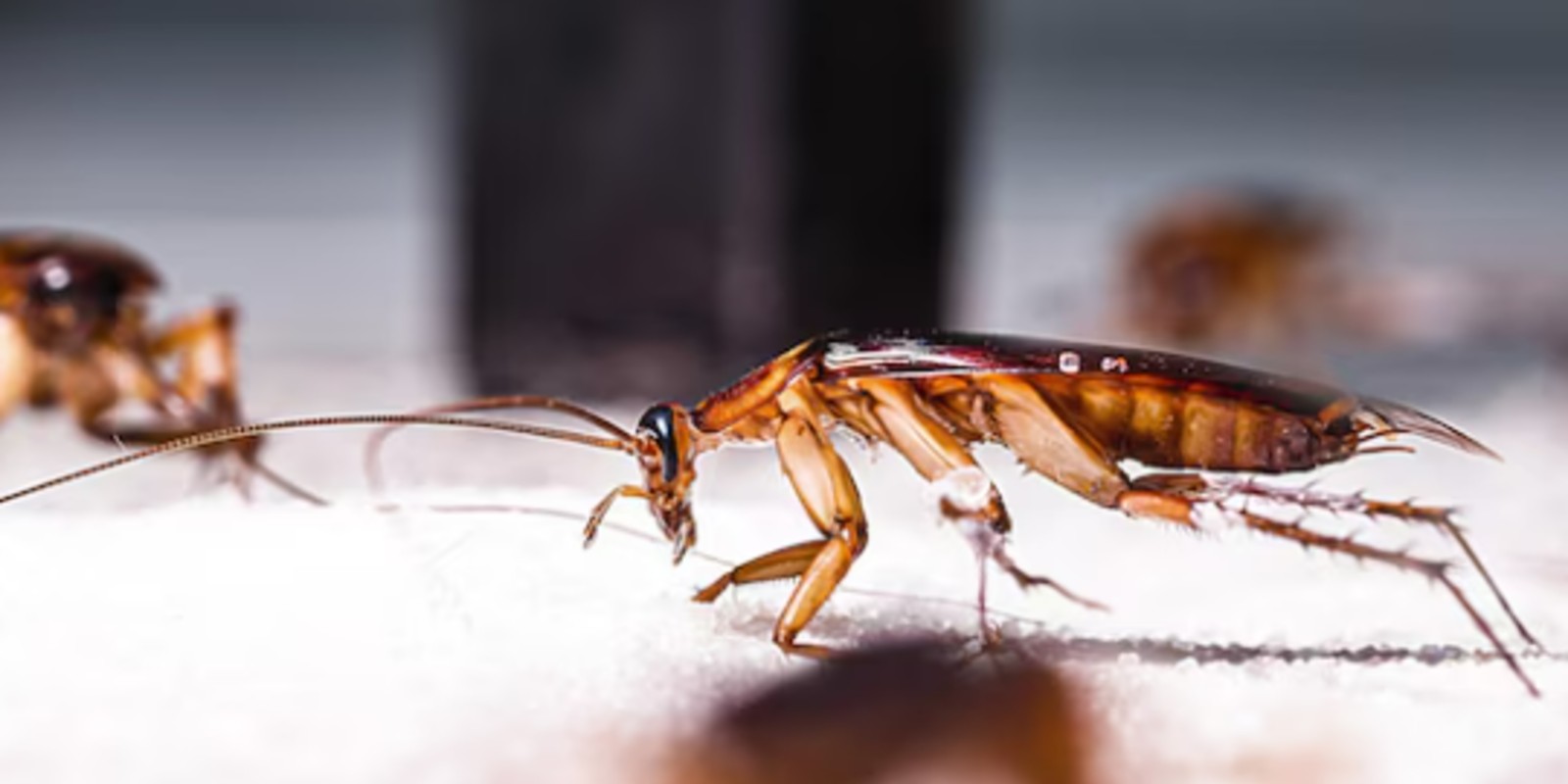
The German cockroach (Blattella germanica) is a small cockroach species commonly associated with indoor environments where food, warmth and moisture are readily available. It is particularly well adapted to living close to human activity.
Adult German cockroaches are generally light brown to tan and have two dark parallel stripes behind the head. Their relatively small body allows them to shelter in narrow cracks, equipment and other concealed areas.
They are commonly associated with kitchens and food-handling environments. Potential harbourage can include spaces behind refrigerators, inside or around cabinets, beneath sinks and near cooking equipment.
German cockroaches can become difficult to control when populations establish themselves across numerous concealed harbourage points. Because they reproduce relatively quickly under suitable conditions, early detection is important.
American Cockroach Overview
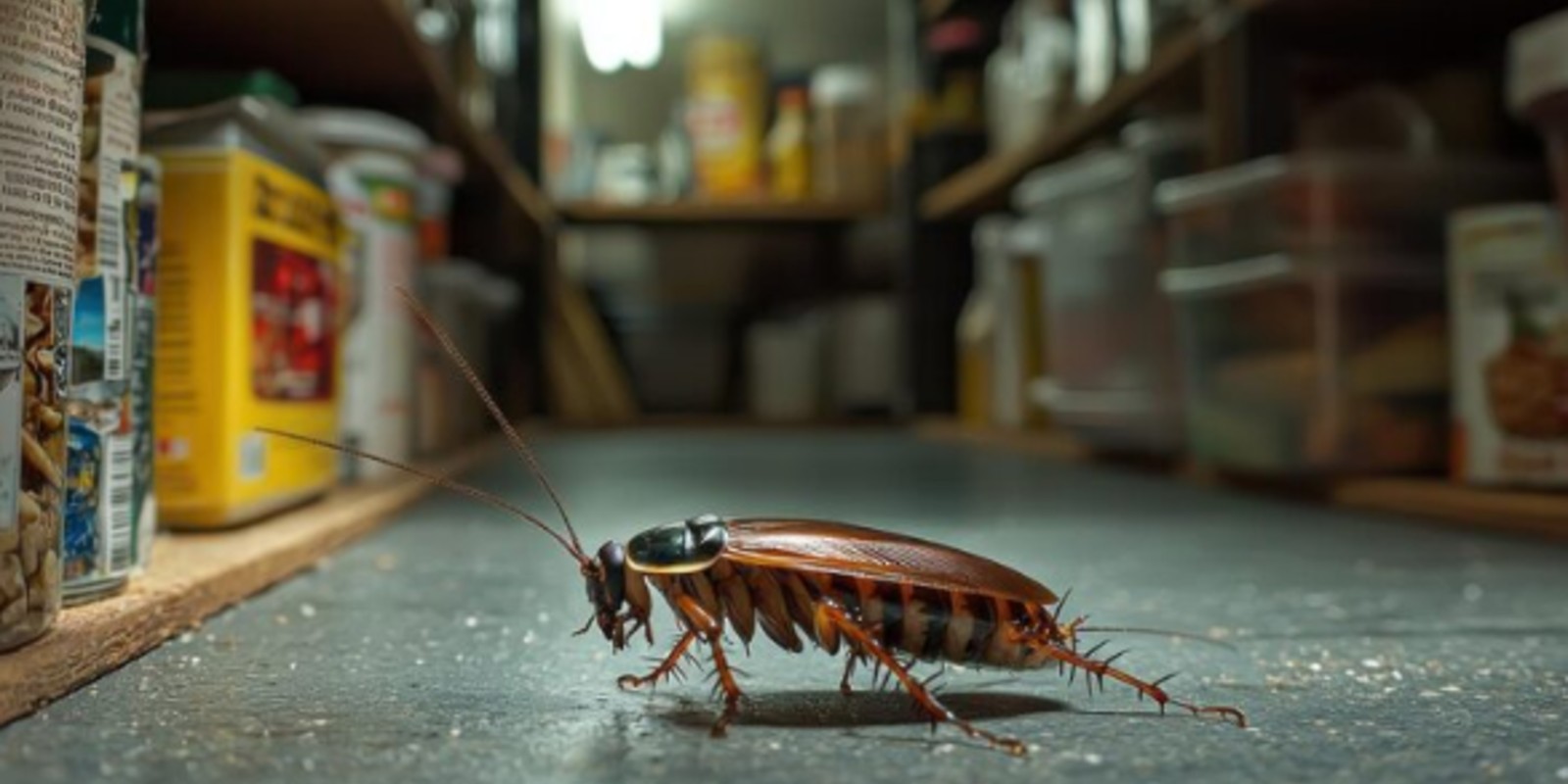
The American cockroach (Periplaneta americana) is a considerably larger cockroach species commonly associated with warm, humid and sheltered environments. It may be encountered around drains, sewerage-related environments, utility spaces and other damp areas.
Adults are generally reddish-brown and have a lighter yellowish marking around the area behind the head. Their larger size makes them easier to notice than German cockroaches when they move through occupied areas.
American cockroaches may enter buildings while searching for food, water or shelter rather than establishing themselves directly around kitchen appliances in the same way German cockroaches commonly do.
Repeated sightings should still be investigated. Activity around bathrooms, floor drains, utility areas or ground-level service spaces can indicate an environmental or structural source that needs to be identified.
Appearance and Size
Appearance and size are among the clearest ways to distinguish German and American cockroaches. German cockroaches are much smaller, while American cockroaches are among the larger cockroach species commonly encountered around buildings.
The key differences can be summarised as follows:
| Characteristic | German Cockroach | American Cockroach |
|---|---|---|
| General size | Small | Large |
| Colour | Light brown to tan | Reddish-brown |
| Key marking | Two dark stripes behind the head | Lighter marking around the area behind the head |
| Typical indoor association | Kitchens and food areas | Drains, utility areas and damp environments |
| Harbourage | Narrow cracks and equipment | Larger protected and humid spaces |
| Infestation pattern | Often breeds extensively indoors | May enter from drainage or surrounding environments |
Size alone should not always be used for cockroach identification as young American cockroaches are smaller than adults. Other evidence such as location, egg cases and infestation patterns should also be considered.
Habitat and Behaviour

German and American cockroaches prefer different types of harbourage, although both require access to food, water and shelter. Understanding these preferences helps determine where an inspection should focus.
German Cockroach Habitat
German cockroaches usually favour indoor environments close to food and moisture. Kitchens provide particularly suitable conditions because they combine warmth, food residues, water and numerous narrow hiding places.
They may remain hidden during periods of activity around the property and emerge when conditions are quieter. Common harbourage areas can include cabinet hinges, cracks, appliance motors and plumbing areas.
Their small size allows them to occupy spaces that may not be obvious during ordinary cleaning.
American Cockroach Habitat
American cockroaches are commonly associated with warmer and more humid locations. Drains, sewer systems, utility areas, basements or ground-level service spaces can provide suitable conditions depending on the property.
They can move from these environments into occupied rooms. A large cockroach appearing in a kitchen therefore does not necessarily mean the primary infestation is inside a kitchen cabinet.
The source may be elsewhere in the building. Inspection should consider the surrounding drainage, plumbing and structural environment when American cockroaches are repeatedly observed.
Breeding and Reproduction
Breeding behaviour is an important difference between German and American cockroaches because it affects how quickly an infestation can become established and how treatment should be monitored.
German cockroaches are particularly associated with rapid population development under favourable indoor conditions. Females carry an egg case, or ootheca, containing multiple developing eggs. This reproductive capacity can allow an indoor infestation to expand when food, water and protected harbourage remain available.
American cockroaches also reproduce through egg cases, but their population development and environmental behaviour differ. Their egg cases may be deposited in protected locations where developing cockroaches remain concealed.
Visible adults represent only one stage of the population, even after pest control treatment egg cases and nymphs may remain after some adult cockroaches have been eliminated.
This is why monitoring after initial treatment rather than assuming that the absence of visible adults confirms complete control.
Signs of a German Cockroach Infestation
German cockroach infestations often produce evidence around kitchens, food storage and other indoor areas where the population is actively breeding. Small cockroaches appearing repeatedly can be an important warning sign.
Common evidence includes live adults or nymphs, droppings, egg cases and shed skins. Dark spotting or cockroach droppings may appear around active harbourage.
Repeated sightings of different life stages can suggest that cockroaches are reproducing within the property rather than occasionally entering from outside.
Activity may be concentrated around:
- Refrigerators and cooking appliances.
- Cabinets and food-storage areas.
- Sinks and plumbing.
- Cracks around kitchen fixtures.
- Warm electrical or equipment areas.
Frequent daytime sightings can justify closer inspection because cockroaches normally favour concealed harbourage.
Signs of an American Cockroach Infestation
American cockroach activity may be associated with large cockroach sightings around drains, bathrooms, utility areas and other damp parts of a property. Their size often makes individual insects more noticeable.
Repeated sightings near the same drain or service area can indicate a nearby access route. Droppings, egg cases and dead cockroaches may also provide evidence.
The location of sightings is particularly useful. If large cockroaches repeatedly appear after entering through a bathroom or floor drain area, the investigation should extend beyond the room itself.
External and shared building environments may also contribute. In some situations, American cockroaches can be entering the occupied space without a large breeding population being established directly inside it.
This distinction can influence whether control focuses primarily on indoor harbourage, external sources or both.
Where Each Species Is Commonly Found
The location of cockroach activity provides useful clues for identification because German and American cockroaches generally favour different environments.
German cockroaches are strongly associated with indoor food and preparation areas. They may be found in homes, restaurants and other properties where kitchens provide suitable conditions.
American cockroaches may be more strongly associated with drainage, utility and service environments.:
| Location | German Cockroach | American Cockroach |
|---|---|---|
| Kitchen cabinets | Common | Possible |
| Behind appliances | Common | Possible |
| Food preparation areas | Common | Possible |
| Floor drains | Possible | Common |
| Utility areas | Possible | Common |
| Sewer-related environments | Less characteristic | Common association |
These are behavioural tendencies rather than absolute rules since cockroaches are adaptable pests and can move into other environments when suitable resources are available.
Treatment Differences
Treatment differences between German and American cockroaches mainly relate to where the infestation is located and how the species is using the property. Effective treatment should target harbourage and movement routes rather than treating both species identically.
German Cockroach Treatment
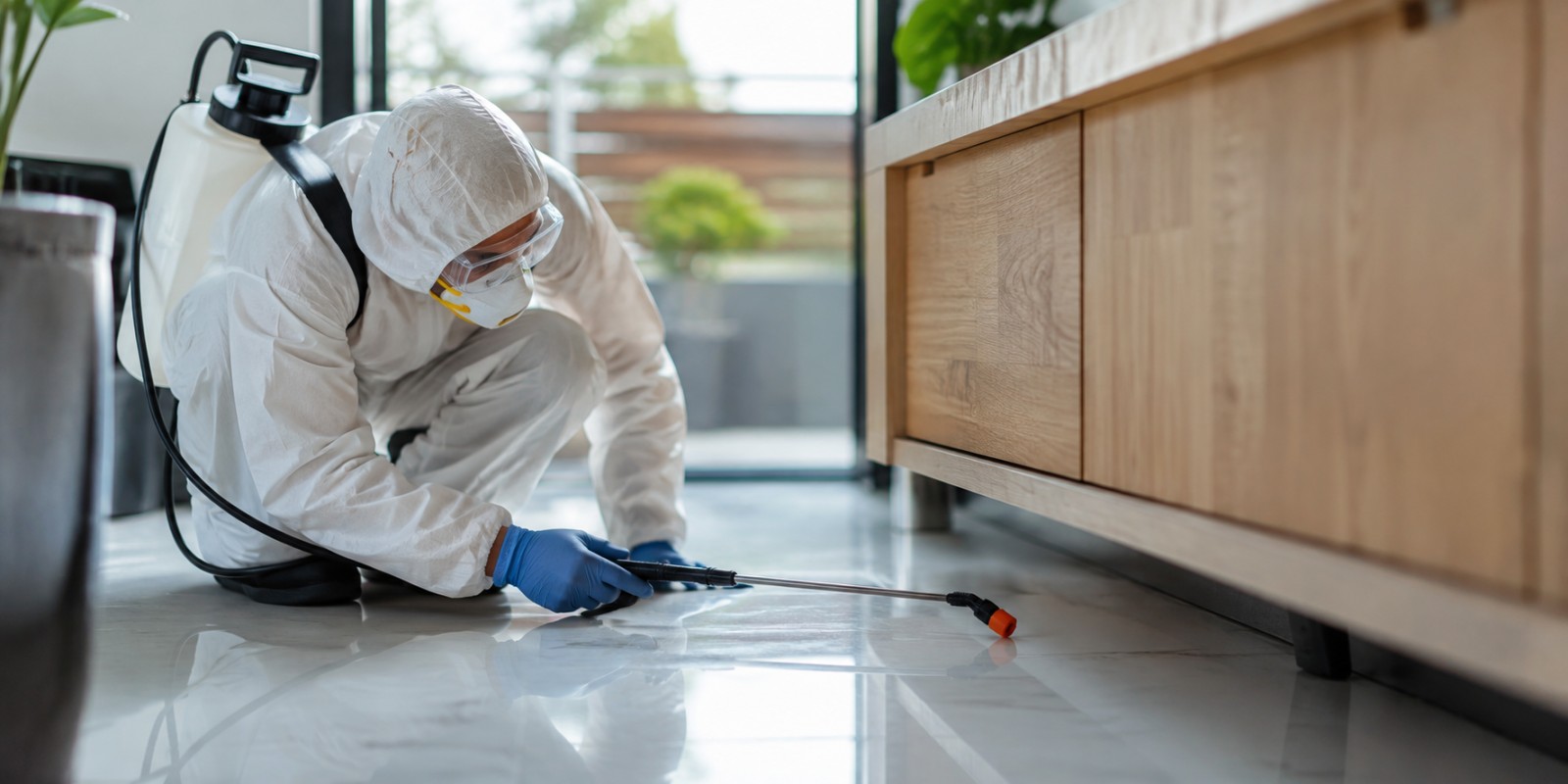
German cockroach control often requires detailed inspection of indoor harbourage. Gel baiting and other targeted applications may be used around active areas depending on the treatment plan.
Sanitation is particularly important. Food residue and competing food sources can affect the overall management programme.
Monitoring can help identify which areas remain active after treatment. Because German cockroaches can occupy many small harbourage points, follow-up may be necessary for established infestations.
American Cockroach Treatment
American cockroach control may require greater attention to drains, utility environments and structural entry routes. Treatment may focus on active harbourage as well as the areas through which cockroaches enter occupied spaces. Drainage and moisture conditions should also be investigated.
If cockroaches are repeatedly entering from an external or shared source, treating only the room where they are found may provide temporary results. The wider building environment may need to be considered.
Sanitation and Prevention for Both Species
Sanitation supports control of both German and American cockroaches by reducing access to food and water. However, sanitation should be combined with species-specific investigation.
- Waste should be managed consistently: Food residues should be removed from concealed areas around equipment and cabinets.
- Moisture requires particular attention: Leaking plumbing and persistently damp areas can provide water for cockroaches even when food hygiene is otherwise good.
- Structural prevention is equally important: Gaps around pipes, drains and service penetrations may need attention depending on the source of activity.
A clean environment cannot guarantee that cockroaches will never enter, particularly in connected buildings, but it can make the property less suitable for an established infestation.
Which Species Is More Difficult to Control?
German cockroaches are often particularly challenging when they establish a breeding population indoors because their small size, concealed harbourage and reproductive capacity can allow infestations to spread through kitchens and equipment areas.
American cockroaches present a different challenge. Their activity may originate from drainage, sewerage or external environments that are not fully controlled within the affected room or individual unit.
Neither species should therefore be considered universally easier to eliminate. The difficulty depends on the infestation.
A limited American cockroach problem with a clear entry route may be relatively straightforward to investigate. A building with persistent drainage-related activity can be more complex.
Similarly, a small German cockroach population detected early may be manageable, while a well-established infestation across multiple kitchen harbourage points may require more extensive treatment and monitoring.
Correct identification helps determine which problem is actually present.
Why Professional Cockroach Identification Matters

Professional cockroach identification helps ensure treatment is directed towards the correct harbourage and entry routes. Misidentifying the species can lead to treatment being concentrated in the wrong areas.
For example, repeated large cockroach sightings around floor drains may require investigation of drainage and structural access. Treating kitchen cabinets alone may not address that source.
A German cockroach infestation requires a different emphasis. Detailed inspection around equipment, food areas and small indoor harbourage becomes more important.
Professional cockroach control can combine identification with inspection, targeted treatment and monitoring. This approach is particularly useful when activity persists after DIY treatment or when several areas of a property are affected.
Frequently Asked Questions
What is the easiest way to tell German and American cockroaches apart?
Size is one of the clearest differences. German cockroaches are small and light brown with two dark stripes behind the head, while American cockroaches are considerably larger and reddish-brown.
Are German cockroaches common in kitchens?
German cockroaches are strongly associated with kitchens and other indoor locations that provide food, warmth and moisture. They can harbour around appliances, cabinets and plumbing.
Do American cockroaches come from drains?
American cockroaches can be associated with drains, sewerage environments and other warm, damp locations. Repeated activity around drains should therefore prompt investigation of possible access routes.
Which cockroach reproduces faster?
German cockroaches are known for their ability to develop substantial indoor populations under favourable conditions. Their reproductive behaviour is one reason established infestations can require careful follow-up.
Can German and American cockroaches occur in the same building?
Yes. A building can provide different environments suitable for different cockroach species. Identification should be based on the actual evidence found in each area.
Does seeing one American cockroach mean there is an infestation?
Not necessarily. An individual may have entered from a drain or surrounding environment. Repeated sightings, egg cases, droppings or other evidence provide stronger indications of established activity.
Can I use the same treatment for both cockroach species?
Some control methods may overlap, but the treatment strategy should reflect where each species is harbouring and entering. Correct identification helps determine where baiting, targeted treatment, sanitation and exclusion should be focused.
Identifying the Species Helps Target the Source
German vs American cockroaches differ in more than appearance. German cockroaches are smaller and strongly associated with indoor breeding around kitchens and food environments, while American cockroaches are larger and more commonly linked with drainage, utility and other humid areas.
These differences influence inspection and treatment. A successful cockroach control strategy should identify where the insects are harbouring, what resources support them and whether they are breeding inside or entering from another environment.
Correct cockroach identification therefore helps move pest control beyond treating the latest visible insect. It allows treatment, sanitation, exclusion and monitoring to focus on the conditions associated with the actual species present.
Match the Cockroach Treatment to the Species
Repeated cockroach activity can require different treatment depending on whether the source is concealed indoor harbourage, drainage or structural access. To identify the cockroach species and determine an appropriate control approach contact ZB I Tech Sdn Bhd today.