Skip to content
Introduction
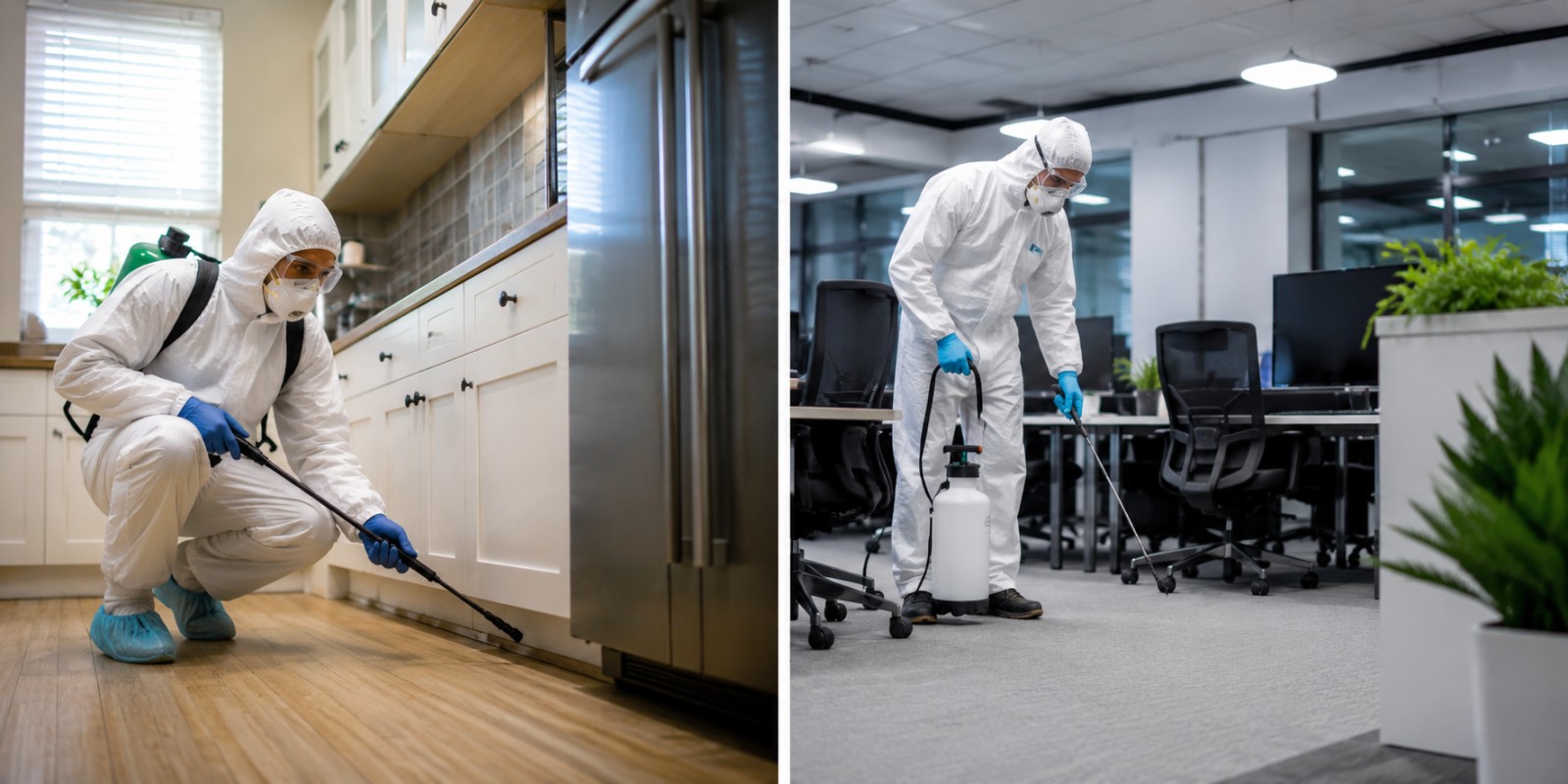
Residential vs commercial pest control differs mainly in property use, pest pressure, treatment frequency, monitoring requirements and the level of operational coordination involved. Residential pest control focuses on protecting homes and occupants, while commercial pest control must also account for business operations, employees, customers, stock, waste, deliveries and industry-specific requirements.
Both services use the same fundamental pest-management principles: identify the pest, inspect the property, control active infestations and reduce conditions that encourage recurrence. However, the scale and structure of treatment can differ considerably.
A household experiencing occasional ants, for example, has different requirements from a restaurant managing continual food preparation and waste. Similarly, a warehouse receiving daily shipments may face different rodent risks from a residential property.
In Malaysia, homes and businesses can both experience cockroaches, ants, rats, flies and other common pests. Choosing the appropriate pest-control approach therefore requires understanding how the property is used rather than simply selecting a standard treatment.
Residential Pest Control
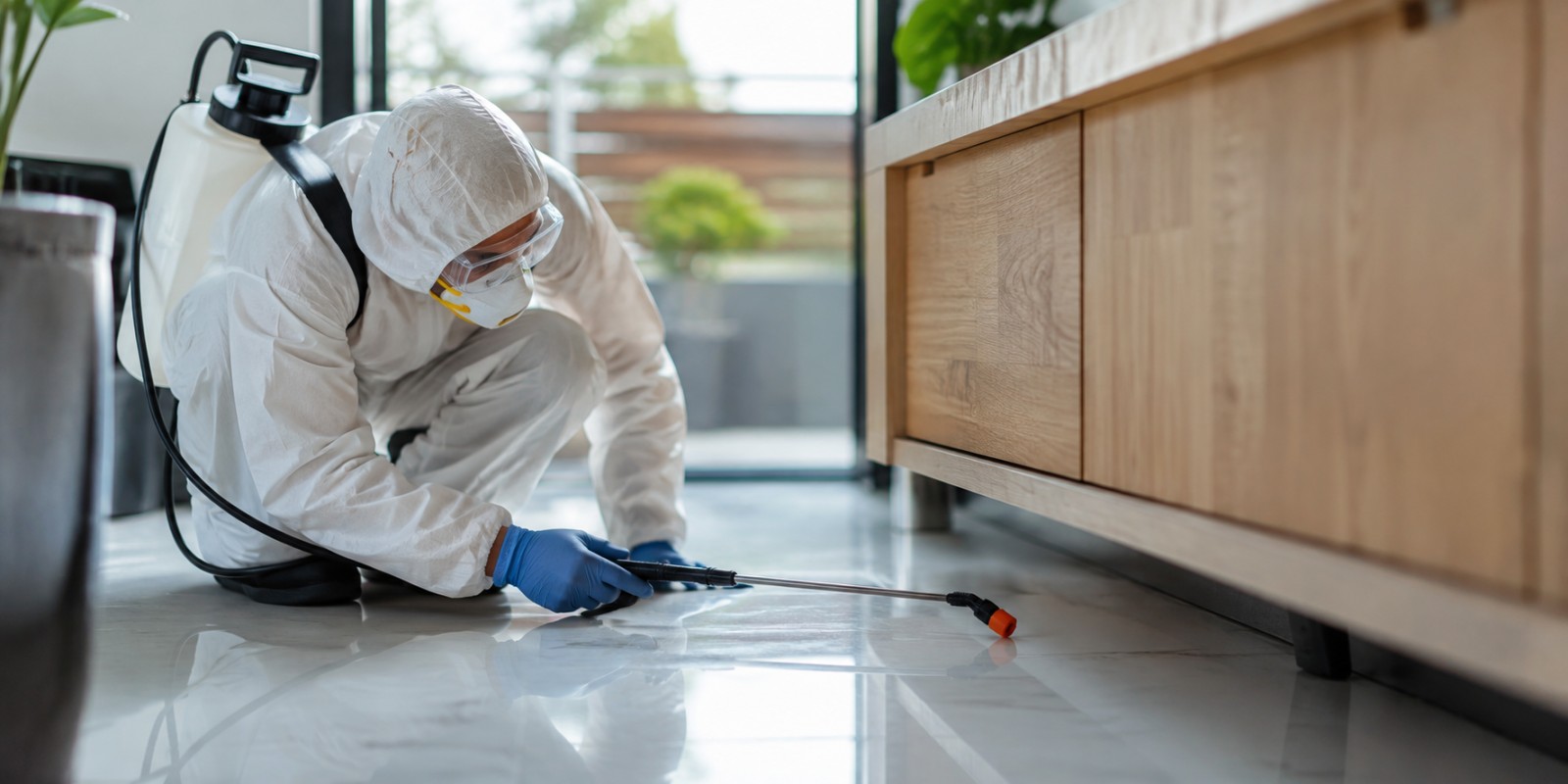
Residential pest control is designed to identify, treat and prevent pest problems within homes and other residential properties. Treatment is planned around household activities, occupants, food areas, pets and the particular pest involved.
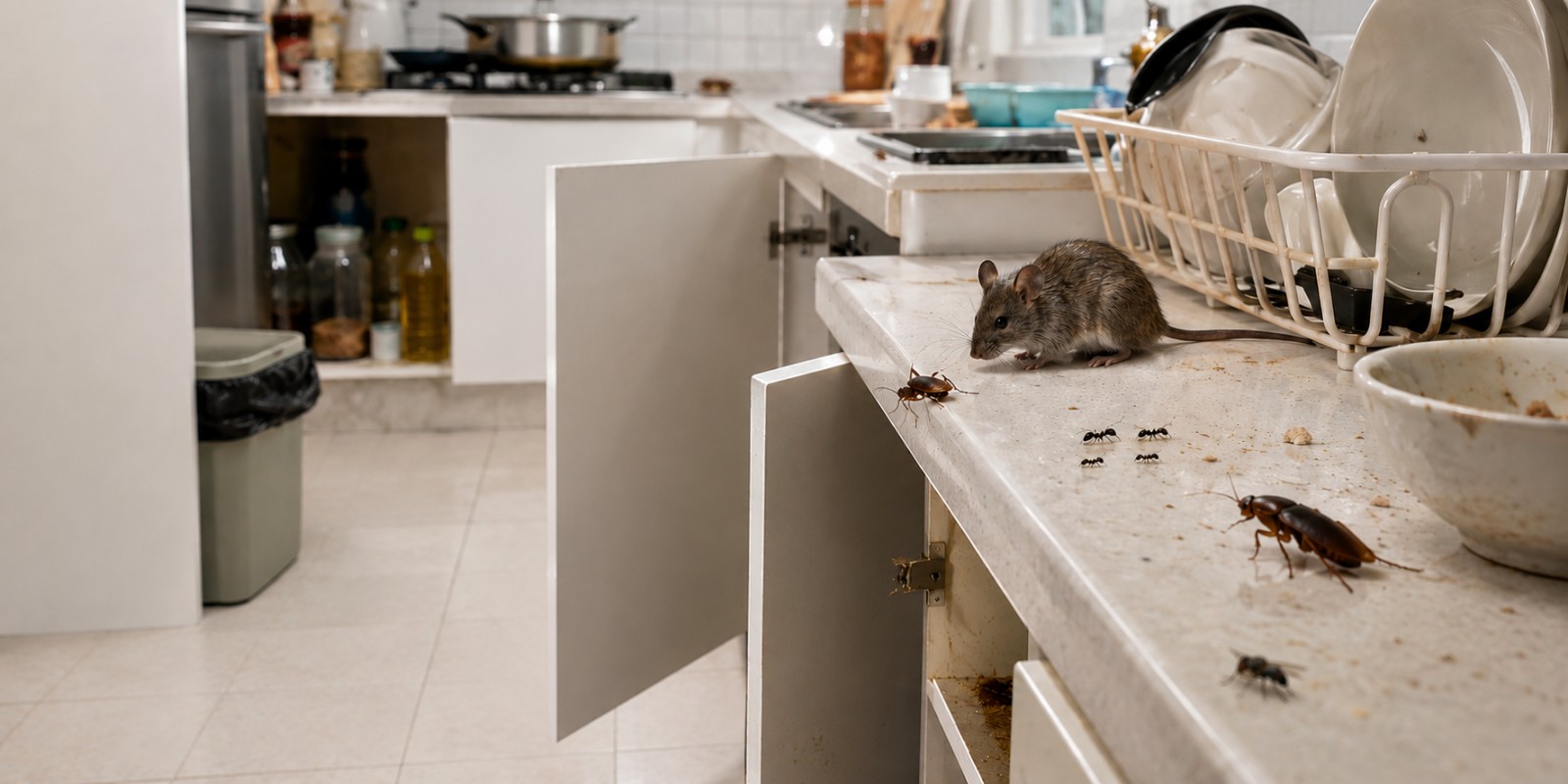
Common residential pest problems may include cockroaches around kitchens, ants searching for food, rats entering ceilings or storage areas and flies associated with waste or organic material.
Home pest control usually begins with inspection.
The technician may examine areas where occupants have reported activity as well as locations that provide food, moisture or shelter.
Treatment is then selected according to the findings.
Cockroach problems may involve baiting and targeted applications, while rat management can include trapping, baiting, monitoring and recommendations for structural proofing.
Residential pest treatment should also address prevention.
A successful treatment may reduce an active infestation, but food residue, leaking plumbing or unresolved entry points can allow another pest problem to develop.
Commercial Pest Control
Commercial pest control is structured around the pest risks created by business operations. These risks can include food handling, stock movement, deliveries, waste generation, customer traffic and larger or more complex buildings.
Different businesses require different forms of commercial pest treatment.
Restaurants may need detailed monitoring around kitchens, drains, food storage and rubbish areas.
Warehouses may require greater attention to loading bays, stock movement and structural entry points.
Offices may experience lower overall pest pressure but can still develop problems around pantries, waste areas and utility spaces.
Commercial pest control may also require scheduled inspections and documented findings.
These records can help businesses identify patterns over time.
If rodent activity repeatedly appears around one loading area, for example, the evidence may point towards a structural access problem that requires maintenance.
Business pest management therefore often involves cooperation between the pest-control provider and several parts of the organisation.
Key Differences in Treatment Requirements
The main difference between residential and commercial pest control is not necessarily the treatment product being used. The larger distinction is how treatment must be planned around the property, infestation and activities taking place there.
Residential treatment is generally focused on the household environment.
Commercial treatment may need to consider operating hours, food production, staff movement, customers, stock and sensitive equipment.
The differences can be summarised as follows:
| Factor | Residential Pest Control | Commercial Pest Control |
|---|---|---|
| Main environment | Homes and residential properties | Business premises |
| Primary consideration | Occupants and household conditions | Operations, staff, customers and property |
| Pest pressure | Depends on household environment | May change with deliveries, waste and operations |
| Monitoring | Based on infestation and household risk | Often more structured |
| Documentation | Usually simpler | May require detailed records |
| Treatment planning | Coordinated around residents | Coordinated around business activities |
| Prevention | Household sanitation and proofing | Operational and structural pest management |
These differences do not mean commercial pest control is always more difficult.
A severe residential infestation can require extensive treatment, while a well-maintained business may mainly need routine monitoring and preventive pest services.
Differences in Pest Pressure

Pest pressure refers to the likelihood and frequency with which pests are exposed to or enter a property. Commercial premises can experience different pest pressure because of their operational activities.
A restaurant, for example, continuously receives food products while producing organic waste.
A warehouse receives stock, pallets and packaging that move through loading areas.
Retail premises may have customers and deliveries entering throughout the day.
Residential properties usually have fewer of these activities, but surrounding conditions can still create significant pest pressure.
A house near drainage systems, vegetation or waste areas may experience repeated pest entry.
Apartments and other connected residential buildings may also experience pest movement between units or shared service areas.
Pest pressure should therefore be evaluated individually rather than assuming every home is low risk and every business is high risk.
Treatment Frequency
Pest-control frequency should reflect the property's pest risk, infestation history and operating conditions rather than follow one universal schedule. Residential and commercial properties can therefore require different service frequencies.
A home with a limited, isolated pest problem may require targeted treatment followed by monitoring and prevention.
If no new evidence appears, frequent treatment may not be necessary.
Commercial premises with ongoing pest pressure may require more regular inspection.
Food businesses, warehouses and other facilities where pests can affect products or operations may benefit from structured monitoring.
Treatment frequency should also distinguish between inspection and pesticide application.
Regular pest management does not necessarily mean chemicals need to be applied during every visit.
An inspection may show that monitoring and preventive measures are sufficient.
The schedule should respond to evidence and risk rather than treating every property identically.
Safety and Treatment Planning
Safety is important in both residential and commercial pest control because treatment may take place around people, food, pets, equipment or frequently occupied areas.
Residential treatment should consider children, household members and pets.
Property occupants should follow any preparation and post-treatment instructions provided for the selected treatment.
Commercial pest control may involve additional operational considerations.
Restaurants need to protect food, utensils and preparation areas.
Offices may require treatment to be scheduled around employees.
Warehouses may contain stock or equipment that affects where treatment can be applied.
The treatment method should therefore be appropriate for the environment.
Professional pest management is not simply about applying a pesticide that controls the target pest. It also requires selecting suitable locations and methods while considering how people use the property.
Monitoring Requirements
Monitoring determines whether pests remain active and whether treatment or preventive measures need to be adjusted. Commercial pest management often uses more structured monitoring, although residential properties can also benefit from it.
Cockroach monitoring devices may help identify active areas.
Rodent monitoring points can indicate movement patterns.
Visual inspections can identify new droppings, damage or other evidence.
For businesses, monitoring records can reveal trends across several visits.
A repeated increase in cockroach activity around one kitchen appliance, for example, may indicate nearby harbourage or sanitation conditions requiring attention.
Residential monitoring is usually simpler.
Homeowners may track where pests are being seen and report changes during follow-up.
In both settings, monitoring improves pest-control decisions because it provides evidence rather than relying solely on whether occupants happen to see pests.
Prevention in Residential Properties
Residential pest prevention focuses on making the home less accessible and less supportive of pest activity. Food, moisture, waste, clutter and structural access are the main areas to consider.
Kitchens should be kept free from unnecessary food residues.
Leaks around sinks and bathrooms should be repaired where practical.
Rubbish should be managed consistently.
Potential pest entry routes around doors, pipes and utility openings should also be inspected.
Storage areas deserve attention because cardboard and clutter can provide concealed harbourage.
Household prevention works best when it becomes part of normal property maintenance.
Waiting until pests become regularly visible can allow an infestation to become more established and more difficult to control.
Prevention in Commercial Properties
Commercial pest prevention requires pest management to be integrated into normal business operations. Cleaning, maintenance, stock management and staff practices can all influence pest activity.
A restaurant may need coordinated routines for food storage, waste removal and drain maintenance.
Warehouses may focus on loading areas, stock rotation and structural proofing.
Offices may prioritise pantries, rubbish areas and utility spaces.
Staff reporting can also support prevention.
Employees frequently observe areas between professional inspections and may notice droppings, insects or unusual damage.
A simple reporting process can ensure this evidence reaches the appropriate person.
Preventive commercial pest control therefore extends beyond the pest-control technician.
Facilities personnel, cleaners, operations teams and employees may all contribute to keeping pest conditions under control.
Documentation and Commercial Pest Management

Documentation can be an important part of commercial pest management because it creates a record of pest activity, inspections, treatments and corrective actions. Residential services generally require less extensive documentation.
Commercial records can include the date of inspection, pest evidence found, monitoring results and areas requiring maintenance or sanitation improvements.
The most useful records do more than confirm that a service visit occurred.
They help identify trends.
For example, repeated fly activity around one waste area may indicate an environmental problem requiring operational changes.
Similarly, recurring rat evidence near the same external doorway may point towards inadequate proofing.
Documentation can therefore help businesses move from repeated reactive treatment towards preventive pest management.
Choosing the Right Service
Choosing between residential and commercial pest control should be based on how the property is used rather than simply its size. A property operating as a business generally requires a commercial approach even when the premises themselves are relatively small.
The first consideration is the type of activity taking place.
Food preparation, storage, manufacturing and frequent deliveries can increase pest-management complexity.
The infestation itself also matters.
An established cockroach population may require detailed treatment regardless of whether it occurs in a home or restaurant.
The pest-control provider should be able to explain:
- Which pest is present.
- Where activity appears to originate.
- Which treatment is recommended.
- Whether monitoring or follow-up is required.
- What property changes could reduce recurrence.
These questions are more useful than choosing a service solely according to whether the property is labelled residential or commercial.
When Professional Pest Control Is Needed
Professional pest control becomes appropriate when pest activity is recurring, widespread, difficult to identify or affecting areas where hygiene and property protection are important. This applies to both homes and businesses.
Residential warning signs can include repeated cockroach nymphs, rat droppings, unexplained damage or pests returning after DIY treatment.
Commercial properties may need professional assessment sooner when pest activity affects food, stock or operational areas.
Professional inspection can identify the species and locate harbourage or entry routes.
Treatment can then be selected according to the actual infestation.
Preventive recommendations are equally important.
Removing the existing pests without addressing accessible food, moisture, waste or structural entry points can leave both residential and commercial properties vulnerable to recurrence.
Frequently Asked Questions
What is the main difference between residential and commercial pest control?
Residential pest control focuses on homes and household conditions, while commercial pest control must also account for business operations, employees, customers, stock, waste and other operational factors.
Are the same pests found in homes and businesses?
Yes. Cockroaches, ants, rats and flies can affect both residential and commercial properties. However, their activity and the conditions supporting them may differ.
Does commercial pest control require more frequent treatment?
Not always. Frequency should depend on pest pressure, infestation history and business activities. Some commercial properties require regular monitoring even when treatment is not needed at every visit.
Is commercial pest treatment stronger than residential treatment?
Commercial pest control is not simply a stronger version of residential treatment. Methods should be selected according to the pest, environment and operational requirements.
Can homeowners use preventive pest control?
Yes. Preventive pest management can help households reduce food, water, harbourage and entry conditions before an infestation becomes established.
Why is monitoring important for businesses?
Monitoring helps businesses detect pest activity early and identify recurring patterns. It can also show whether treatment and preventive measures are working.
When should I contact a professional pest-control provider?
Professional assessment should be considered when pests repeatedly return, breeding is evident, several areas are affected or the infestation is creating hygiene, operational or property concerns.
Matching Pest Management to the Property
Residential vs commercial pest control differs primarily in the environment that needs to be managed. Homes require treatment that considers household occupants and everyday living conditions, while businesses often require pest management to work around operations, staff, customers, deliveries and stock.
Both approaches still depend on the same foundation.
The pest must be identified, the source investigated and the appropriate treatment selected. Monitoring then determines whether activity is declining, while sanitation, structural maintenance and other preventive measures reduce the risk of recurrence.
The distinction is therefore not simply residential treatment versus stronger commercial treatment.
Effective pest management is about matching the service structure to the property's actual risks and activities. A professional assessment can help determine what level of inspection, treatment, monitoring and prevention is appropriate for either environment.
Choose Pest Management That Fits How Your Property Operates
Homes and businesses can experience the same pests, but their treatment, monitoring and prevention requirements may differ considerably. Property owners and business operators can book an appointment with ZB I Tech Sdn Bhd to assess current pest activity and determine an appropriate residential or commercial general pest control approach.