Skip to content
Pest prevention and extermination can actually cost you more than you think. While a minor ant or cockroach problem in a small residential property may require a relatively straightforward treatment. A concealed termite infestation, recurring rodent problem or pest issue across a large commercial building can require more extensive inspection, monitoring, and follow-up.
Pest control costs in Malaysia depend on the pest involved, size and type of property, infestation severity, treatment method, and number of visits required. There is no single pest control rate that accurately applies to every home or business because treatment requirements can differ considerably between properties.
Understanding the factors behind pest treatment cost is therefore more useful than comparing service prices alone. A quotation should reflect the actual scope of work required to identify, control, and monitor the infestation.
What Determines Pest Control Cost in Malaysia?
Pest control pricing is primarily determined by the amount and type of work required to manage the infestation. The pest species itself matters, but property conditions and treatment complexity can have an equally significant effect.
A pest control company generally needs to consider several factors before determining an appropriate service scope:
- Type of pest requiring treatment.
- Size and layout of the property.
- Severity and distribution of infestation.
- Treatment method required.
- Accessibility of affected areas.
- Number of treatments or follow-up visits.
Two properties experiencing the same pest can therefore receive different service recommendations.
For example, cockroach activity limited to one residential kitchen is different from cockroach activity throughout a restaurant containing multiple preparation, storage and waste areas. The pest is the same, but the scale and management requirements are not.
Type of Pest
The type of pest is one of the main factors affecting pest control service price because different species require different inspection and treatment methods.
General household insects such as ants or cockroaches can sometimes be treated using targeted baiting or residual applications. The work may be relatively contained when the infestation is limited to a small area.
Termites require a different approach because activity may remain concealed within timber, walls or below the building. Treatment may involve baiting, soil treatment or other termite-specific methods.
Rodent management may require trapping, secured bait stations, monitoring and identification of structural entry points.
Bed bug treatment can involve detailed inspection of sleeping areas, furniture and belongings, with follow-up treatment sometimes necessary because the insects are difficult to locate.
The pest should therefore be correctly identified before meaningful treatment requirements can be established.
Property Size and Type

Property size affects pest management cost because larger premises generally require more inspection time, treatment areas and monitoring points. However, total floor area is not the only consideration.
A small but highly complex property can require more work than a larger open space.
For residential properties, technicians may need to inspect kitchens, bathrooms, bedrooms, ceilings, gardens and external boundaries depending on the pest.
Commercial properties can contain additional risk areas such as:
- Loading and delivery zones.
- Food preparation areas.
- Storerooms and warehouses.
- Waste disposal areas.
- Plant and equipment rooms.
- Shared service corridors.
A commercial building may also require treatment outside operating hours or coordination with different departments.
Property type therefore influences both the physical work and the way treatment must be organised.
Infestation Severity
Infestation severity affects pest treatment cost because an established infestation generally requires more intervention than isolated activity. Severity should be assessed from evidence rather than simply counting the pests visible during inspection.
Many pests spend much of their time hidden.
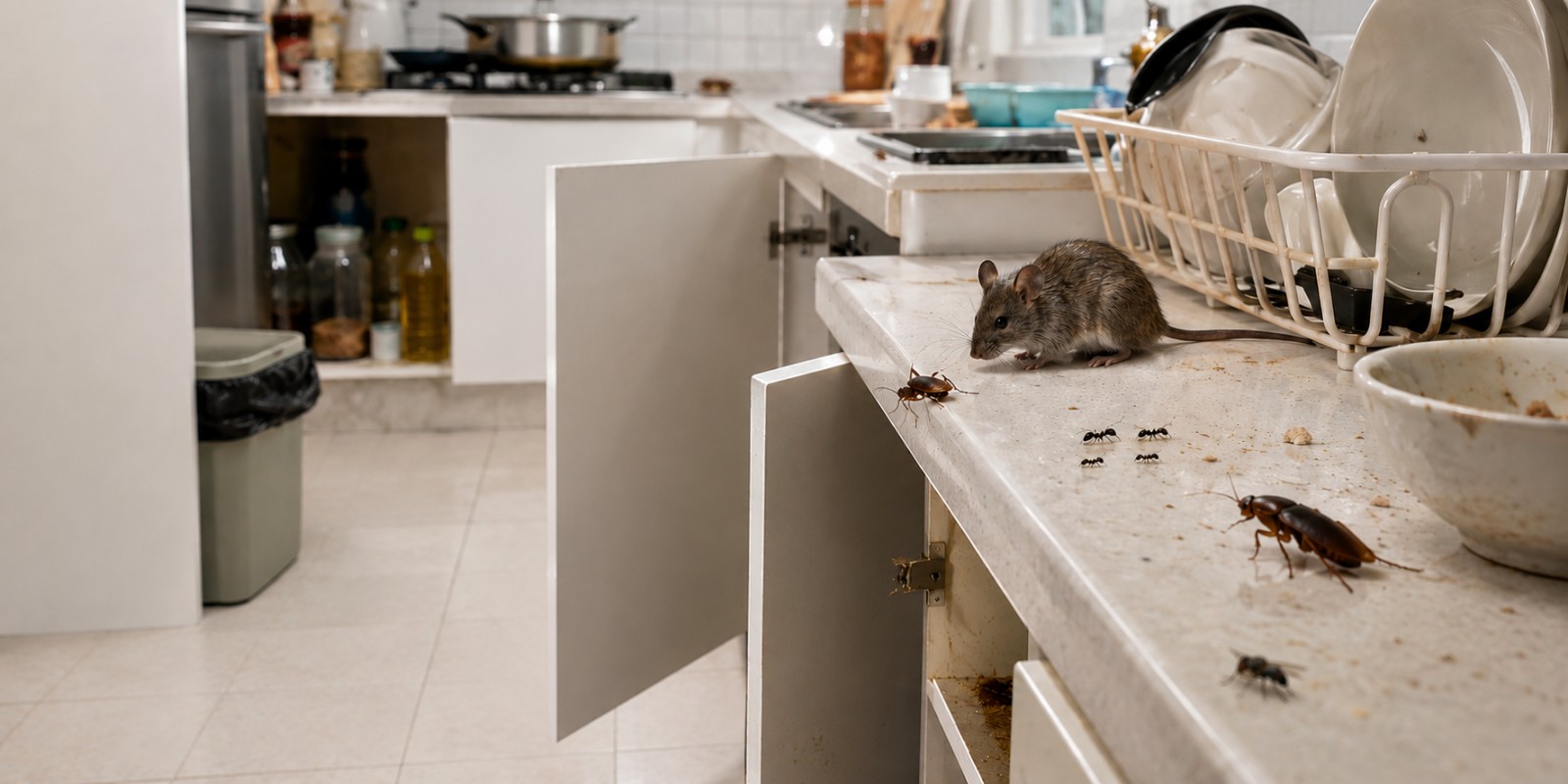
A property with only a few visible cockroaches could still contain substantial harbourage behind cabinets or equipment. Similarly, seeing one rat does not establish whether there is a single animal or a larger population.
Technicians may evaluate severity using evidence such as:
- Quantity and distribution of droppings.
- Number of active harbourage areas.
- Damage to materials or food.
- Monitoring-device activity.
- Presence of nests or breeding evidence.
- Number of affected rooms or zones.
A widespread infestation may require additional treatment locations and follow-up visits.
Early identification can therefore reduce treatment complexity by allowing intervention before pest activity spreads throughout the property.
Treatment Method
Treatment methods can significantly influence pest control pricing because different techniques require different materials, equipment and monitoring periods.
The appropriate method should be selected based on the pest and site conditions rather than simply choosing the least expensive option.
Baiting
Baiting is commonly used for certain insects, rodents and termites. The bait is positioned where target pests are likely to encounter it. Some baiting programmes require repeated monitoring because consumption and pest activity must be checked over time.
Trapping
Trapping is frequently used for rodents and may be appropriate where chemical treatment is unsuitable. Effective trapping requires correct placement and monitoring. Devices may need to be repositioned according to activity.
Residual Treatment
Residual insecticides may be applied to selected areas where insects travel or harbour. The treatment method and product must be appropriate for the environment. Sensitive locations such as food preparation areas can require additional precautions.
Termite Treatment
Termite control may involve soil treatment, baiting or targeted treatment depending on the infestation and construction of the property. The treatment area can extend beyond the visible damaged location because subterranean termite colonies may access the building through concealed routes. Different methods therefore involve different amounts of labour, material and follow-up.
Accessibility and Structural Conditions
Accessibility affects treatment complexity because technicians need to inspect and reach locations where pests are active. Infestations inside open, accessible spaces are generally easier to investigate than activity hidden behind fixed structures.
Potentially difficult areas include ceilings, wall voids, built-in cabinets, roof spaces and areas beneath heavy equipment.
Commercial properties may contain machinery or stored goods that limit access to walls and floors.
Structural conditions can also affect treatment.
Cracks, damaged drains, concealed service spaces and multiple building extensions can create numerous pest routes that require investigation.
In some cases, additional contractors may be required to open or repair inaccessible building components. These works are normally separate from the pest control treatment itself.
Treatment Frequency
Treatment frequency influences overall pest management cost because some infestations require more than one visit. The number of visits should depend on pest biology and monitoring results rather than an arbitrary schedule.
A minor infestation may be controlled after limited intervention.
Established cockroach populations may require follow-up monitoring to determine whether hidden activity remains.
Rodent programmes often require several inspections because traps or bait stations must be checked and movement patterns assessed.
Termite baiting programmes can require monitoring over an extended period while termite activity is evaluated.
Commercial premises may also use scheduled preventive pest management rather than requesting treatment only after a pest is seen.
The service frequency should therefore reflect actual risk and evidence.
Residential vs Commercial Pest Control Pricing
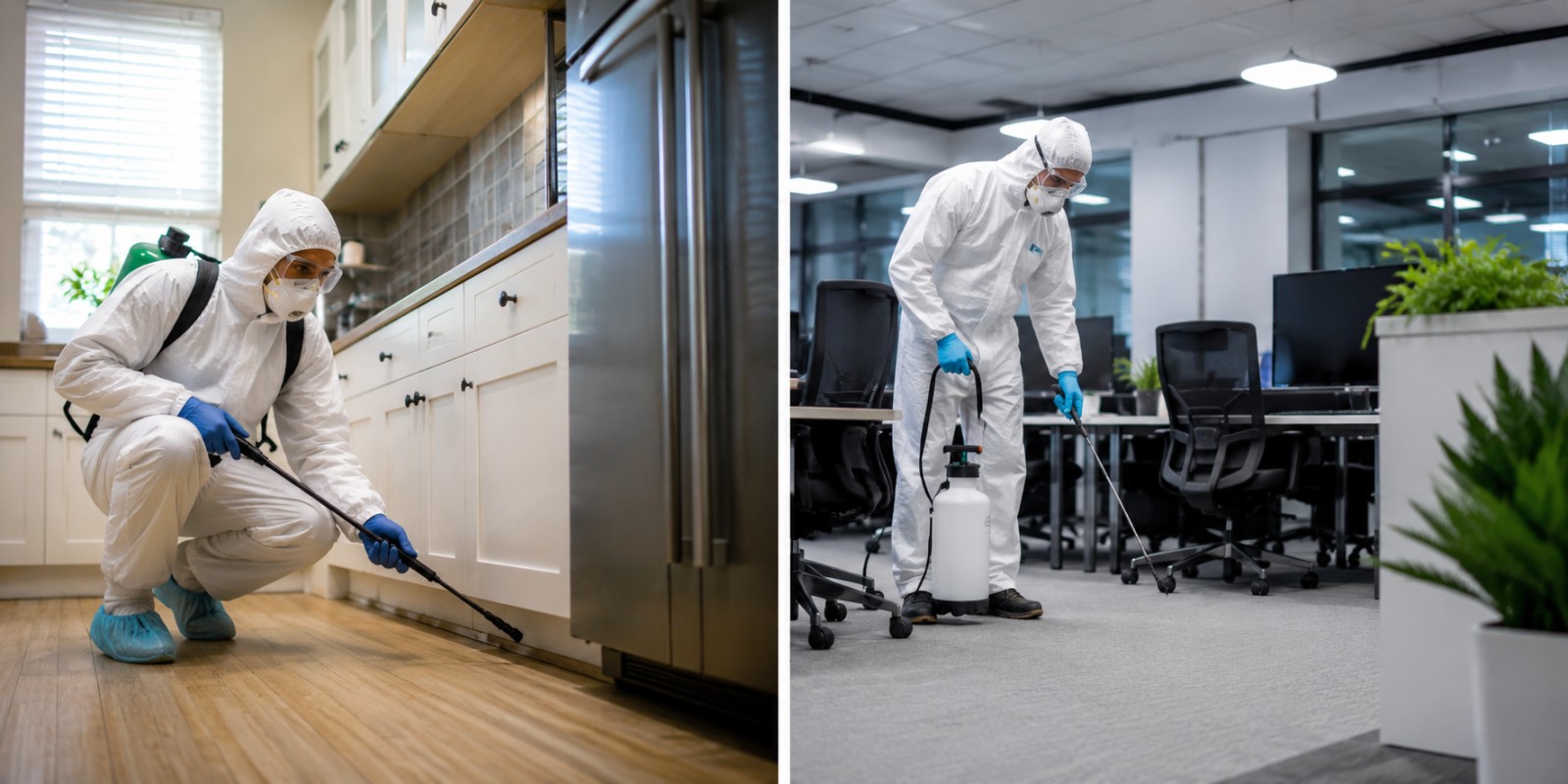
Residential and commercial pest control pricing can differ because the scope and management requirements are often different. Commercial premises generally have more operational areas, access points and documentation needs.
A residential treatment may focus on several rooms and exterior areas around a home.
A commercial programme may involve inspection of delivery points, food storage, waste facilities, production spaces and building boundaries.
The following comparison illustrates some of the factors involved.
| Factor | Residential Property | Commercial Property |
|---|---|---|
| Treatment area | Usually smaller | Often larger or divided into zones |
| Occupancy | Household members | Staff, customers and contractors |
| Pest monitoring | Based on household risk | Often scheduled |
| Access points | Doors, windows, drains and utilities | Loading bays, deliveries, drains and service areas |
| Documentation | Usually basic service information | May require structured service records |
| Service timing | Based on household availability | May need coordination around operations |
Commercial treatment is not automatically more complicated in every case. A severe residential termite infestation may require substantially more work than a low-risk office pest programme.
Inspection remains necessary before comparing the two.
Additional Service Requirements
Some pest problems involve work beyond the initial treatment. These additional requirements can affect the total service scope.
Follow-Up Monitoring
Follow-up visits determine whether pest activity has declined and whether further treatment is necessary. Monitoring is particularly important for rodents, termites and persistent insect infestations.
Pest Proofing
Proofing involves reducing structural entry points that allow pests into the building. Examples include sealing utility gaps, installing suitable door sweeps and securing vents. The pest control company may recommend these improvements even when building repair work must be completed separately.
Cleaning and Decontamination
Rodent droppings, dead pests and contaminated materials may require cleaning after an infestation. Extensive cleaning or decontamination may be treated as a separate service because controlling the pests and cleaning the affected environment are different tasks.
Structural Repair
Termite damage, rodent gnawing and other pest-related structural problems may require contractors after the infestation has been controlled. Pest treatment stops or reduces pest activity. It does not restore damaged timber, wiring, walls or other building components.
One-Time Treatment vs Ongoing Pest Management
One-time treatment and ongoing pest management serve different purposes. A one-time service is generally intended to address a defined current problem, while ongoing management includes repeated inspection and monitoring.
One-time treatment may be appropriate when:
- The infestation is minor.
- The source can be identified.
- Entry points can be corrected.
- There is limited risk of recurrence.
Ongoing pest management may be more suitable for properties exposed to continuous pest pressure.
Restaurants, warehouses and some commercial premises can benefit from scheduled monitoring because deliveries, waste and customer activity constantly change the environment.
Residential properties with repeated termite or rodent activity may also require continued monitoring.
The appropriate option should be based on risk rather than assuming a long-term programme is always necessary.
How to Compare Pest Control Quotes
Pest control quotations should be compared according to scope rather than looking only at the final amount. Two quotations can describe very different services even when they appear to address the same pest.
Before comparing quotes, determine what each provider includes.
Important points to review include:
- Whether inspection is included.
- Which pest and areas are covered.
- What treatment method will be used.
- How many visits are included.
- Whether follow-up monitoring is provided.
- What preventive recommendations are included.
The quotation should also identify important exclusions.
For example, structural repair, cleaning or building modifications may not be part of the pest control service.
Understanding these details helps prevent unexpected differences between the initial expectation and actual treatment scope.
Why the Lowest Pest Control Rate May Not Be the Best Comparison
The lowest pest control rate does not necessarily represent the most appropriate treatment because service scopes can differ considerably. A lower quotation may cover a smaller treatment area, fewer visits or a different control method.
This does not mean that a more expensive service is automatically better.
The relevant question is whether the proposed work addresses the identified infestation.
A quotation should ideally explain the pest being treated, the areas covered and the treatment method.
Customers should be cautious when extensive treatment is recommended without inspection or when a quotation provides no clear explanation of what work will be carried out.
Pest management should be based on evidence rather than selecting treatment purely according to price.
Can Early Pest Control Reduce Treatment Complexity?

Early pest detection can reduce treatment complexity because smaller infestations are generally easier to locate and manage. Waiting until pest activity becomes widespread may increase the number of affected areas.
For example, identifying a rodent entry point early may allow proofing and trapping before rats establish several nesting areas.
Finding termite activity before extensive timber damage develops can also allow treatment planning before more building components become affected.
Early intervention does not guarantee that treatment will be simple. Some pests can already be well established before visible signs appear.
Regular inspection and attention to warning signs remain important for this reason.
Frequently Asked Questions (FAQs)
What affects pest control costs in Malaysia?
The main factors include pest type, property size, infestation severity, treatment method, accessibility, and number of visits required. The service scope should ideally be determined after inspection.
Does a larger property always require more expensive pest control?
Not necessarily. Larger properties may require more inspection and treatment, but infestation severity and accessibility also matter. A small property with a severe concealed infestation can require substantial work.
Why do some pest control treatments require several visits?
Some pests have concealed nests, eggs or movement patterns that cannot be assessed during one treatment. Follow-up visits allow technicians to monitor activity and adjust the treatment where necessary.
Is commercial pest control different from residential treatment?
The treatment principles are similar, but commercial properties often require broader inspection, structured monitoring and coordination around business operations. The exact requirements depend on the premises.
Should I choose the cheapest pest control quotation?
A quotation should be assessed according to what is included rather than price alone. Compare inspection, treatment method, covered areas, follow-up and exclusions before deciding whether two services are genuinely equivalent.
Does preventive pest control require regular treatment?
Not always. Preventive pest management can include inspection, sanitation, proofing and monitoring without applying pesticides during every visit. Treatment should respond to evidence and risk.
Why can the final treatment requirement change after inspection?
Pest activity may be more extensive or located differently from what was initially reported. Inspection provides information about severity, access and environmental conditions that can affect the appropriate treatment plan.
Understanding the Value Behind Pest Control Pricing
Pest control costs are shaped by the actual work needed to identify and manage an infestation rather than a single standard rate. Pest type, property conditions, severity, treatment method and follow-up requirements can all change the service scope.
For this reason, comparing quotations only by their final amount can overlook important differences in inspection, treatment coverage and monitoring.
A useful pest control quotation should make the proposed work understandable. Property owners can then evaluate whether the service addresses both the active pest problem and the conditions that may allow it to return.
Request an Assessment for an Appropriate Treatment Plan
An inspection can help determine the pest involved, the extent of activity and the treatment requirements before a service plan is established. Homeowners and businesses can book an appointment with ZB I Tech Sdn Bhd to arrange an assessment and discuss the pest management approach appropriate for their property.